

Lawn Care Norwich: How to Spot and Stop Chinch Bugs Before They Wreck Your Lawn
Hey, it’s Steve with American Landscape & Lawn Science. If you’ve been noticing copper-brown or dead patches showing up in your lawn and can’t figure out why, you’re not alone — this is one of the most common calls we get during summer from homeowners in Norwich, Franklin, Lisbon, and Preston. I came across a solid tip video from Eye on Gardening TV recently — host Tim Alan gives a practical walkthrough on identifying and treating chinch bugs — and I wanted to build on it with what we actually see playing out on lawns here in Eastern Connecticut. The fundamentals Tim covers are right on point, but our soils, our summers, and our grass types add some local nuance worth knowing about.
Video and screenshots are used for commentary and educational purposes. Eye on Gardening TV is not affiliated with or endorsing American Landscape & Lawn Science.
Why Chinch Bugs Are a Genuine Threat to Norwich Lawns Every Summer
Chinch bugs are not a theoretical problem. They show up on Connecticut lawns every year, and they tend to hit harder in seasons with hot, dry stretches — which we get plenty of here in Eastern Connecticut. The sandy loam soils common across Norwich, Franklin, and the surrounding towns drain fast and stay drier than heavier soils. That’s exactly the environment chinch bugs prefer. Add in the open, sun-exposed front lawns you find throughout these neighborhoods, and you’ve got conditions where a small infestation can do serious damage in a matter of weeks.
After 41 years working on lawns across this region and caring for more than 3,000 active clients, I’ve seen what happens when chinch bug damage gets misread as drought stress — and how different the outcome is when someone catches it early. The good news is these bugs are findable if you know what to look for and where to look.
What You’re Looking For: Identifying a Chinch Bug
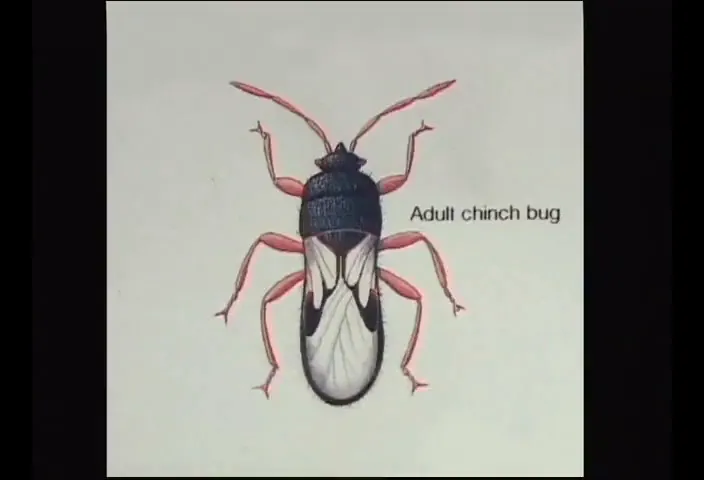
Chinch bugs are small — easier to miss than you’d expect. Here’s what to look for when you’re down in the grass trying to confirm what you’ve got:
- Gray to dark, almost black body — they’re tiny, but that dark color helps them stand out against the thatch
- A distinct white band across the shoulder area — this is the most reliable visual marker; if you see a dark insect with that white stripe, you’re likely looking at a chinch bug
- Small but mobile — they can fly, and they move quickly when disturbed
- Smaller than a ladybug — you may need to get close, but they are visible to the naked eye
I’ve had customers call in convinced they had a disease problem, only for us to go out and find chinch bugs crawling at the grass line. Once you’ve seen them a few times, that dark body with the white band becomes very recognizable.
Where to Look: The Most Important Search Tip
This is where a lot of people waste time. The instinct is to go straight to the worst-looking dead area and start searching there. But by the time an area has fully died off, the bugs have often already moved on to healthier turf.
The right place to look is at the border between healthy grass and damaged grass — that transition zone where the lawn is yellowing or just starting to brown. That’s where chinch bugs are actively feeding and laying eggs right now. Think of it as following the action, not the aftermath.
Once you’re at that border, try this:
- Part the grass gently with your hands at the threshold between good and damaged turf
- Lay your hands flat on the soil surface and be still
- Count to about 50 and watch
- If chinch bugs are present, they’ll crawl out onto your hands — that’s your confirmation
It’s a simple check and it takes less than two minutes. I’ve recommended this to Norwich homeowners for years and it works every time when you’re looking in the right spot.
Reading the Damage: What the Patterns Tell You
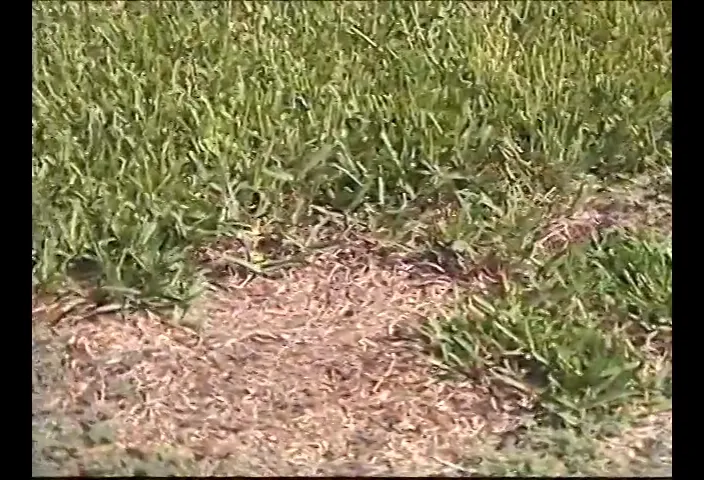
Chinch bug damage tends to follow a predictable sequence — yellowing first, then browning, then complete death of the affected area. Knowing this progression helps you catch it earlier in the cycle.
A few things to keep in mind when reading the pattern:
- Yellowing alone can point to either disease or chinch bug activity — don’t assume one without checking
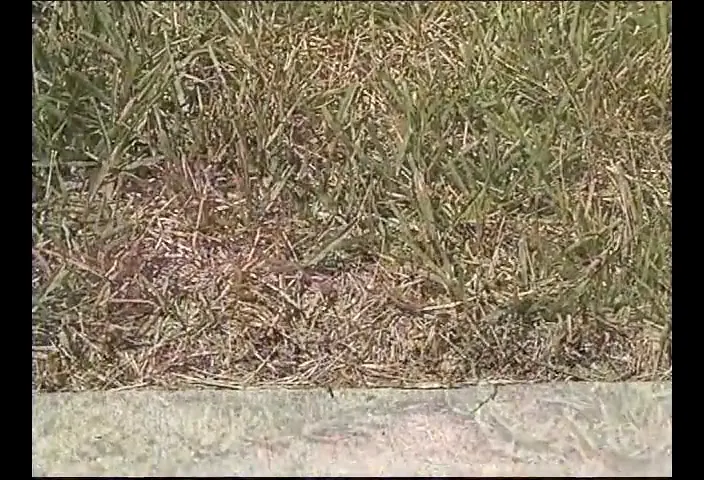
- Browning near hardscape — driveways, sidewalks, patios — could be heat and water stress from the pavement rather than bugs. Hot surfaces dry out the soil edge fast, especially here in Connecticut summers
- Large brown dead areas in the middle of the lawn where the grass had been growing fine before — that’s a stronger indicator of chinch bug activity
- Damage that doesn’t respond to watering — if you water and nothing improves after a couple of days, chinch bugs become the likely culprit, not drought
This last point is the one I come back to constantly. I’ve seen it play out hundreds of times across Franklin, Lisbon, and Norwich — the homeowner keeps watering, the patches keep spreading, and the problem just gets bigger. The grass isn’t responding because the damage isn’t about water supply. It’s about the bugs blocking the grass’s ability to use the water it gets.
Treatment: What Actually Works (and Where People Go Wrong)
Once you’ve confirmed chinch bugs, you need to move quickly. The longer you wait, the more ground they cover. Treatment options generally come in two forms — granular and liquid pesticides — and both can be effective when applied correctly.
If using a granular product
Granular treatments need to be activated with water after application. This is non-negotiable. The product just sits there doing nothing until it gets watered in. A lot of DIY treatments “fail” for this exact reason — the product was applied but never activated properly.
Reapplication timing is everything
Here’s the part that catches people off guard: the first treatment will knock down active adults, but it will not affect the eggs. Chinch bug eggs survive the initial application, hatch, and you end up right back where you started — except now a few weeks have passed and the damage has grown.
The fix is simple but requires discipline:
- Reapply 10 to 14 days after the first treatment to catch the next hatch
- Plan for a minimum of two applications, and for heavier infestations, a third treatment
Think of it this way — the first application handles what’s there now, the second catches what hatches after, and the third improves your odds of breaking the cycle entirely. Our lawn care programs include timed insect control applications specifically because single applications rarely close the loop on pest problems like this.
After Treatment: Don’t Just Wait and Hope
A lot of people treat the bugs and then assume the lawn will bounce back on its own. Sometimes it does, but there’s a real risk in just leaving dead areas sitting open. Bare patches with no grass cover are an open invitation for weeds. Seeds blow in, settle into the exposed soil, and by the time the grass starts trying to recover, you’ve already got competition.
The better approach after treatment:
- Cut out truly dead sections — don’t leave dead material sitting on top of the soil
- Focus treatment at the threshold between live and dead turf, not just the already-gone areas
- Support recovery with proper fertilization to help the surrounding grass thicken and fill in
If you’re not sure whether what you’re seeing is chinch bug activity or a disease, your local UConn Extension office is a great resource for a second opinion. Bring photos and samples if you can — they can help narrow it down quickly.
Common Mistakes I See Norwich Homeowners Make
- Looking in the wrong spot. Searching the dead center of the damaged area instead of the live-dead border is the most common mistake — and it’s why people think they don’t have bugs when they actually do.
- Only applying once. One treatment addresses adults only. Without that follow-up application 10 to 14 days later, the hatching eggs restart the problem.
- Skipping the water-in step. Granular products don’t activate on their own. Dry application means wasted product and no results.
- Assuming it’s drought. I’ve seen this play out hundreds of times in Norwich and Franklin. The lawn isn’t responding to water because the grass can’t move water through its system — the bugs have already done that damage. More irrigation isn’t the answer.
- Waiting too long. Small patches in June are a manageable problem. Large dead sections in August are expensive. The window matters.
Norwich Chinch Bug Action Checklist
- ✅ Look for a small, dark insect with a white shoulder band — that’s your ID
- ✅ Search the border between good grass and damaged grass, not the dead center
- ✅ Part the grass and wait — count to 50 and watch for bugs crawling out
- ✅ Watch for yellowing to browning that doesn’t respond to watering
- ✅ Treat promptly with granular or liquid insecticide per label directions
- ✅ If using granular, water it in thoroughly after application
- ✅ Reapply 10 to 14 days later to catch hatching eggs
- ✅ Plan for at least two applications, and three for heavier infestations
- ✅ Remove dead material and address bare patches to prevent weed takeover
- ✅ Keep children and pets off treated areas for 24 to 72 hours per label guidance
We’re Here If You Need a Hand | Lawn Care Norwich
Chinch bugs are one of those problems that rewards fast action. The earlier you catch it, the less damage you deal with — and the less it costs to address. If you’re seeing something in your lawn and you’re not sure what’s causing it, give us a call. We’ll come out and take a look.
We’ve been doing this work for over 41 years across Norwich, Franklin, Lisbon, Preston, and the surrounding Eastern Connecticut communities. Surface insect control is built into our program specifically because pests like chinch bugs and deer ticks are a consistent reality in this region. With a 90% program retention rate and over 400 five-star reviews, we think our results speak for themselves.
📞 (860) 887-2344
🌐 lawnscience.com
📍 43 Gulliver Circle, Norwich, CT 06360
Monday – Friday: 8AM–5PM
Serving Norwich, Franklin, Lisbon, Preston, and surrounding Eastern Connecticut communities.
— Steve Bousquet, Owner | American Landscape & Lawn Science