

Lawn Care Madison: Spring Weed Control Made Easy for Dandelions and Other Broadleaf Weeds
Hi, I’m Steve Bousquet with American Landscape & Lawn Science. Every spring, the phones start ringing with the same question from homeowners across Madison, Clinton, and Guilford: “Steve, why does my lawn look worse than my neighbor’s?” Nine times out of ten, broadleaf weeds are the answer. Dandelions, clover, chickweed — they show up fast once temperatures climb, and if you’re not ready for them, they can take over a lawn before you know it.
I recently came across a video from Tommy’s Turf Talks that does a solid job breaking down spring broadleaf weed control, and it got me thinking about how that advice applies specifically to what we see out here in Connecticut. Some of it lines up well. Other parts need a little local context. That’s what I want to cover here.
Video and screenshots are used for commentary and educational purposes. Tommy’s Turf Talks is not affiliated with or endorsing American Landscape & Lawn Science.
Why Spring Weed Pressure Hits Hard in Madison and Along the Connecticut Shoreline
Madison sits right along the shoreline, and that coastal location comes with some quirks. Soil around here can swing between sandy and loamy depending on which neighborhood you’re in, and that variation affects how weeds establish and how herbicides move through the ground. Generally speaking, our soils tend to be lower in pH than ideal, which already stresses out turf grass and gives opportunistic weeds a foothold.
We’ve been working with the University of Connecticut soil testing labs for years, and one of the things we see consistently is that lawns in this region — Madison, Killingworth, and up through the shoreline corridor — need more customized care than the generic advice you find on the internet. Dandelions especially love stressed turf. When the grass is thin or the soil is off, those taproots go deep and the plants spread seed everywhere. Catching them early in spring is the single best thing you can do for lawn care in Madison.
Know What You’re Dealing With Before You Spray Anything
Before anything else — figure out what kind of weed you actually have. This sounds obvious, but it trips people up more than you’d think. In early spring up here in Connecticut, the weed pressure is almost always broadleaf: dandelions, clover, chickweed. What it is probably not, at least not yet, is crabgrass. Crabgrass is a warm-season grassy weed that won’t really show up until soil temperatures hit around 55 degrees consistently.
That matters because broadleaf weeds and grassy weeds are controlled completely differently. Treating one with the wrong product wastes your time and your money. After working with over 3,000 active clients across eastern Connecticut, I can tell you this is one of the most common mistakes homeowners make when they decide to handle weeds on their own. You need the right tool for the right weed.
The Dandelion Problem — and Why Timing Is Everything
Dandelions are the headline act every spring, and there’s a reason for that. Each plant can release hundreds of seeds once it goes to flower. If you let them get to that stage, you’re basically replanting your weed problem across the entire yard. So the goal in spring is to knock them out before they mature and spread.
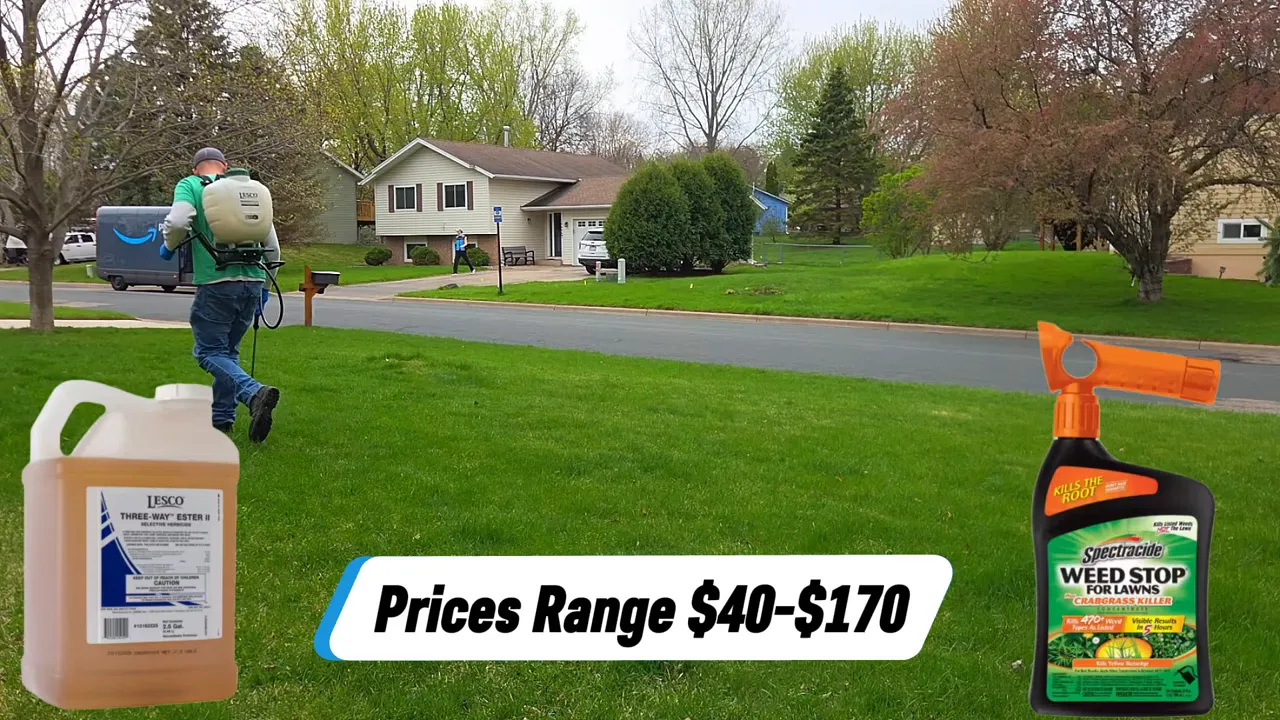
The good news is dandelions are actually one of the easier broadleaf weeds to control. You don’t need anything exotic or expensive. A standard selective post-emergent herbicide, something in the “three-way” category, handles dandelions pretty well. The key word there is selective. You want a product that targets broadleaf plants while leaving your turf grass alone. Products like Roundup are non-selective — they kill everything green, which means they’ll damage your lawn just as fast as they take out the weeds.
Liquid Spray vs. Weed-and-Feed: One of These Actually Works Better
One thing from the video that I completely agree with: skip the granular weed-and-feed for this job. I know it sounds convenient, but here’s the problem. Most broadleaf herbicides enter the plant through the leaf surface. A granule sitting on the soil isn’t getting enough contact with that leaf tissue to do the job right.
A liquid spray applied directly to the leaves gives you much better uptake and faster results. If you want to stretch your dollar, a concentrate mixed with a sprayer typically gives you multiple applications out of one purchase. Ready-to-use products are fine for small areas, but for anything beyond a spot treatment or two, the concentrate option usually makes more sense.
Application Tips That Actually Make a Difference
Timing your application correctly is where a lot of DIY efforts fall apart. A few things to keep in mind:
Don’t mow right before you spray. If you cut the lawn down low just before treating, you’ve removed a lot of the leaf surface that the herbicide needs to absorb into the plant. After you apply, hold off on mowing for at least 24 hours — give the product time to move through the weed before you disturb it.
Rain is the other big one. If there’s rain in the forecast within 12 to 24 hours of your application, wait. Product washing off the leaf before it absorbs means you’ve done the work for nothing. Connecticut springs can be unpredictable, so it’s worth keeping a closer eye on the forecast than you might during other times of year.
One more thing worth mentioning: if your lawn has been through a dry stretch, consider watering a day or so ahead of treatment. Weeds that are stressed and dormant don’t take up herbicide as well. Get them actively growing and they’ll respond to treatment much faster.
Don’t Blanket Spray If You Don’t Have To
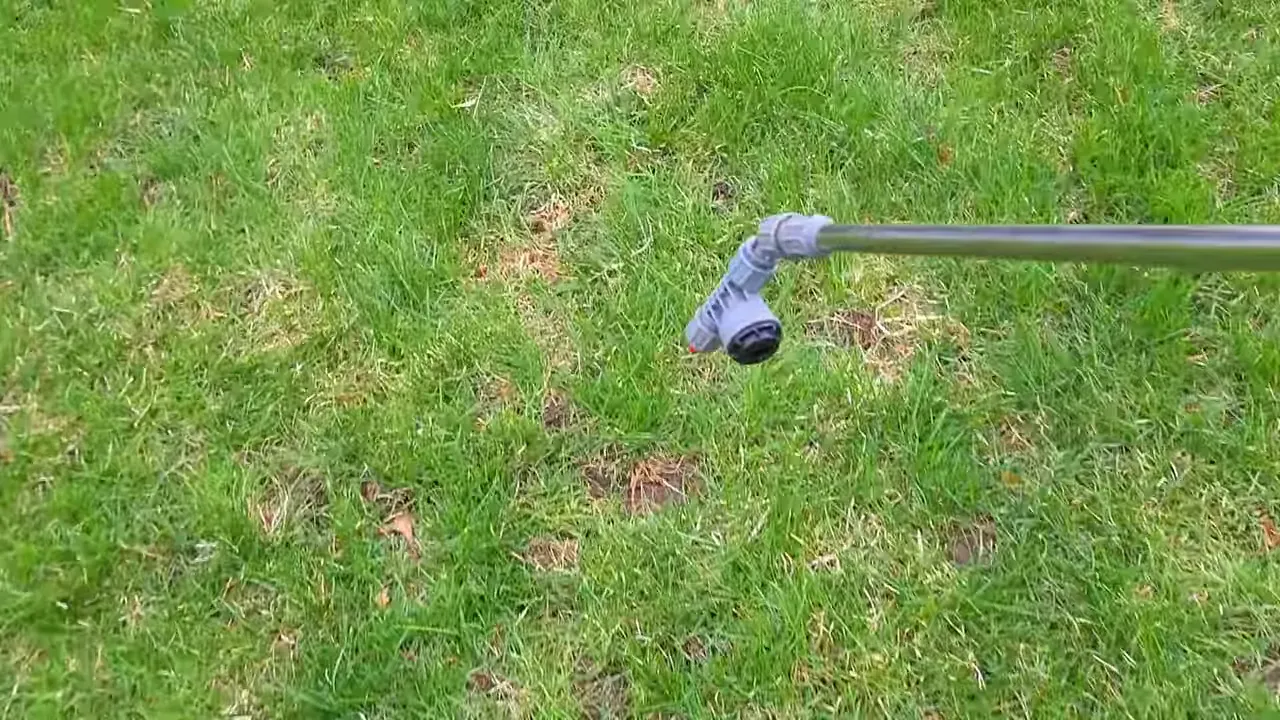
Post-emergent herbicides work on weeds that already exist. They do nothing for future weed germination. So if you’re not seeing weed pressure across the whole yard, there’s no reason to treat the whole yard. Spot spray what you can see, and you’ll save product, reduce unnecessary exposure, and keep the process efficient.
This is actually one of the principles behind how we approach weed control in our programs here at American Landscape & Lawn Science. Precision matters. Blanket applications where they aren’t needed don’t improve results — they just increase the amount of product going on your lawn and the cost you’re absorbing.
Mistakes I See Homeowners Make Every Spring
After 41 years of doing this work across Madison, Norwich, North Franklin, and surrounding towns, certain patterns repeat themselves. Here are the ones that come up most often:
Using the wrong product. Roundup or similar non-selective herbicides on a lawn with weeds in it is probably the biggest one. People assume herbicide is herbicide — it’s not. The grass pays for that mistake.
Treating too late. If dandelions are already going to seed in your yard when you finally spray, you’ve already lost the first round. Getting out there early, while the weeds are young and actively growing, gives you a much better result.
Mowing right after spraying. I’ve seen this one hundreds of times. Someone sprays in the morning and mows in the afternoon because they figure they’re already out there. That wipes out most of the product before it has a chance to work.
Expecting one application to solve everything. For heavy broadleaf infestations, a second pass a few weeks later is often needed. That’s normal. Don’t give up on the process because the first round didn’t eliminate every weed overnight.
A Simple Spring Weed Control Checklist
- Confirm the weed type — broadleaf or grassy — before buying any product
- Target dandelions before they flower and release seed
- Choose a selective post-emergent liquid herbicide, not weed-and-feed granules
- Spot spray visible weeds rather than covering the whole lawn unnecessarily
- Avoid mowing for 24 hours before and after application
- Apply when no rain is expected for at least 12 to 24 hours
- If the lawn is dry, water a day before to wake up stressed weeds
- Plan for a follow-up application if weed pressure is heavy
Get Help with Spring Weed Control in Madison and Beyond
Spring is a short window. The longer dandelions and other broadleaf weeds sit in your lawn, the harder the season gets. Whether you want to tackle it yourself with the right approach or you’d rather hand it off to a team that’s been doing this since 1983, we’re here to help.
At American Landscape & Lawn Science, we carry a 90% program retention rate and over 400 five-star reviews from families across eastern Connecticut. Our lawn care programs include targeted broadleaf weed control using a combination of five active ingredients, applied with edge-to-edge coverage and timed precisely to Connecticut’s growing season. Water-based, safe for pets and kids once dry, and built around what your specific lawn actually needs.
We serve Madison, Clinton, Guilford, Killingworth, Norwich, North Franklin, Colchester, and communities throughout eastern Connecticut. To request a free lawn evaluation, visit us at lawnscience.com or give us a call at (860) 642-9966. Our office is open Monday through Friday, 8AM to 5PM.