

Lawn Care Norwich: Core Aeration vs. Liquid Aeration and What Actually Works
Hey, it’s Steve Bousquet with American Landscape and Lawn Science. Aeration is one of those topics that comes up constantly in lawn care conversations, and there’s a lot of confusion around it. I came across a solid video from Turf Mechanic that breaks down the core vs. liquid aeration debate really well, and it got me thinking about how this applies specifically to properties here in Norwich and the surrounding eastern Connecticut communities. The honest answer is that while most of the general advice holds up, the soil conditions we deal with in this part of the state make the conversation a little more nuanced. Worth taking a closer look.
Video and screenshots are used for commentary and educational purposes. Turf Mechanic is not affiliated with or endorsing American Landscape and Lawn Science.
Why Aeration Matters More Here Than You Might Think
In Norwich, Franklin, Lisbon, and the broader eastern Connecticut area, we’re largely working with sandy loam soils. That’s actually a detail a lot of generic lawn care advice doesn’t account for. Sandy loam behaves differently from heavy clay-based soils you’d find in other parts of the country. It drains fast, which can be a good thing, but it also means water and nutrients can move through the root zone before the grass really gets a chance to use them.
Aeration is one of the most practical ways to address that. After 41 years treating lawns across Norwich and the surrounding region, I can say that the lawns that aerate consistently tend to perform noticeably better than those that skip it. The root systems develop deeper, the turf holds up better through summer stress, and the fertilizer we apply actually does more of what it’s supposed to do.
What Core Aeration Is and How It Works
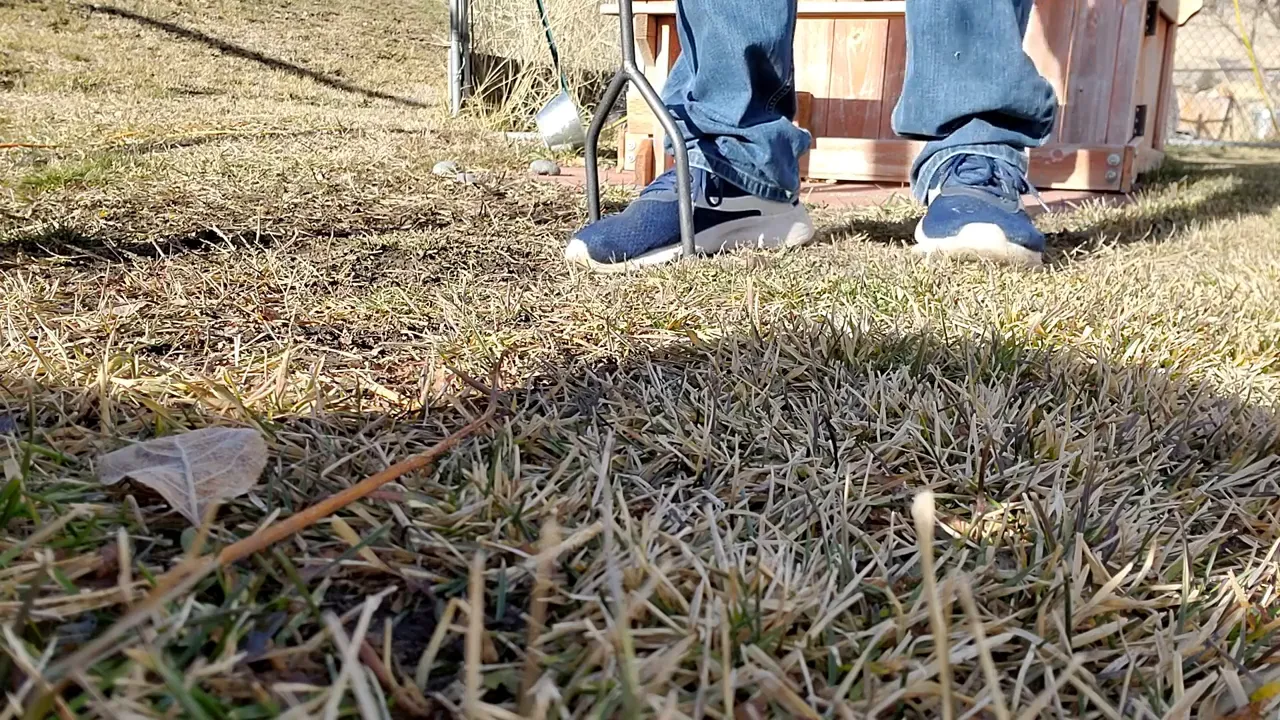
Core aeration is a mechanical process. A machine or hand tool pulls small plugs out of the ground, usually a few inches deep, and those openings create channels in the lawn. The effects are meaningful:
- Air gets into the root zone, which roots actually need to function properly
- Water can penetrate deeper instead of running off or pooling at the surface
- Fertilizer moves down toward the roots rather than sitting on top
- Physical compaction gets relieved in the spots where holes are punched
Understanding how core aeration works helps explain why the liquid organic approach we use at American Landscape and Lawn Science is designed the way it is. With core aeration, you’re only opening the soil right where each hole is punched, and typically only two to three inches deep. With our liquid organic aeration, we’re working 100% of the lawn surface down seven to ten inches deep. That’s a meaningful difference.
The Appeal of Liquid Aeration Products and Why People Get Confused
Liquid aeration products are attractive for obvious reasons. Spray it on, water it in, done. No renting a heavy machine, no scheduling a crew, no spending hours with a hand tool across a half-acre of lawn. For anyone managing their own lawn care in Norwich, that convenience is real.
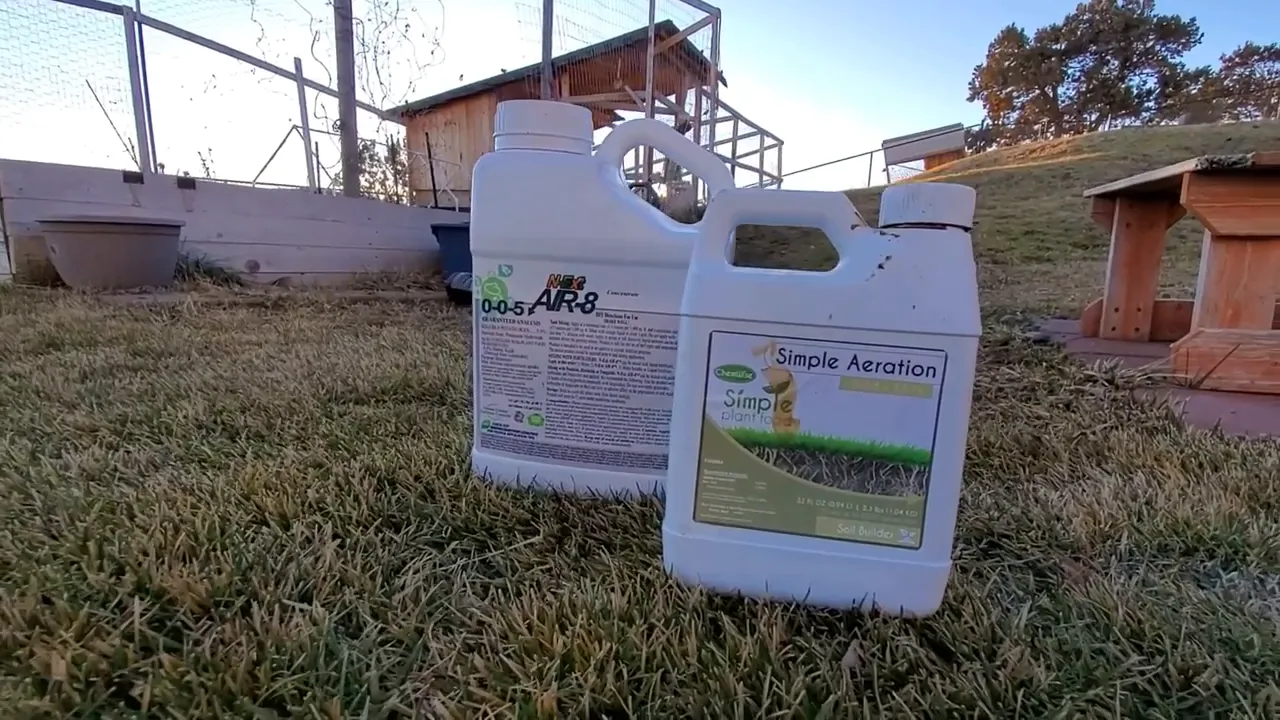
But the problem is the name. Calling these products “liquid aeration” sets an expectation that they do the same thing as pulling cores from the ground, and they don’t. Not exactly. What they mostly contain are surfactants, sometimes called wetting agents, along with ingredients like humic acid, potassium, and in better formulas, components like seaweed, kelp, and compost tea. Those aren’t filler ingredients. They do useful things. The key is understanding what they actually accomplish.
What Liquid Aeration Actually Does Well
Here’s where liquid products earn their place, especially on Connecticut’s sandy loam soils.
The surfactant in a quality liquid aeration product helps break the surface tension that keeps water from penetrating into dry or compacted soil. If you’ve ever watered a lawn and watched the water bead up and run off instead of soaking in, that’s the problem surfactants are solving. They help water move into the soil profile rather than sitting on top of it or rolling away.
On our sandy loam soils in the Norwich area, that’s a meaningful benefit. Water that penetrates deeper encourages roots to chase it, and deeper roots are more drought-tolerant roots. I’ve seen lawns that looked nearly identical at the start of spring end up in completely different condition by August based mostly on how well they were rooting early in the season.
Beyond the water movement piece, the humic acid, seaweed, kelp, and compost tea components in a good liquid aeration product stimulate biological activity in the soil. Healthy soil biology is what makes the difference between dirt that just holds grass and soil that actively supports it. Microbial life improves soil structure over time in ways that mechanical tools can’t replicate on their own.
How We Use Liquid Organic Aeration in Our Programs
We include liquid organic aeration as part of our lawn care programs, and it’s one of the things that separates our approach from a more conventional fertilize-and-spray routine. Our formula uses humate, yucca as a surfactant penetrant, seaweed, kelp, and compost tea. What that does is coat the soil particles and create pore space in between them, which reduces compaction across 100% of the lawn surface. Roots then chase those organic nutrients down into the profile, and we’re seeing penetration down to seven to ten inches.
We apply it twice per season, once in spring and once in late summer and fall, and each application keeps working for up to 90 days. Over time, consistent liquid organic aeration builds the kind of soil health that transforms how a lawn performs through heat, drought, and heavy use.
What Norwich Homeowners Get Wrong About Aeration
The most common mistake I see is treating aeration as a one-time task rather than part of an ongoing program. The soil doesn’t stay open forever. Compaction returns. Biological activity still needs support through the season. One pass per year addresses the mechanical side of the problem temporarily, but it doesn’t build the kind of soil health that liquid organic products contribute to over multiple applications and multiple seasons.
The other thing I see is people applying liquid products at the wrong time of year. In the middle of winter, soil biology is basically dormant. Applying products meant to stimulate microbial activity when the soil is cold isn’t going to accomplish much. Timing matters as much as method. In the Norwich area, late March into April is when we start seeing consistent soil temperatures that support this kind of treatment.
What to Know About Aeration for Your Norwich Lawn
- Sandy loam soils in eastern Connecticut respond well to liquid organic aeration because of how the formula interacts with soil particles at depth
- Liquid organic aeration applied as temperatures rise in spring is a strong foundation for the growing season
- Don’t apply liquid biological products in cold soil — wait until spring temperatures are consistently warming, typically late March into April in the Norwich area
- Water deeply and infrequently so roots are encouraged to grow down toward moisture rather than staying shallow
- Soil improvement is cumulative — a single treatment helps, but consistent seasonal care is what actually transforms a lawn over two to three years
Reach Out If You’re Not Sure What Your Lawn Needs
We inspect every property before recommending a program, and we work with the University of Connecticut soil testing labs to back up what we suggest with actual data. That’s not something most companies do, but it’s the reason we’re confident the programs we offer are right for the specific soils and conditions here in Norwich, Franklin, Lisbon, Preston, and the surrounding communities.
With over 3,000 active clients across Connecticut and more than 41 years in business, we’ve treated just about every soil condition this region throws at a lawn. If you’re not sure whether liquid organic aeration or a full-season program is the right fit for your property, give us a call. Someone local will walk through it with you.
- Phone: (860) 887-2344
- Website: lawnscience.com
- Office Hours: Monday through Friday, 8 AM to 5 PM
Service Areas: Norwich, North Franklin, Lisbon, Preston, and surrounding eastern Connecticut communities.
Follow Us for More Lawn Care Tips
Get FREE Grub Control
when you sign up for our 5-Step Lawn Care Program.
