

Lawn Care Connecticut: How to Identify, Treat, Repair, and Prevent Grubs (4-Step Plan)
Hey folks, it’s Steve at American Landscape & Lawn Science. We’ve been taking care of lawns across Connecticut for over 41 years now, and I’ll tell you — when it comes to summer lawn problems, grub damage is one of the most misread situations I see homeowners deal with. Every season, I drive through neighborhoods in Norwich, Franklin, Colchester, and the surrounding towns and I see lawns that have been treated for the wrong thing entirely — money spent, product put down, and the problem still comes back the next year. That’s frustrating for everyone.
I recently came across a really solid video from the Pest and Lawn Ginja on YouTube that lays out a simple four-step process for dealing with turf insects and grubs. It’s good foundational stuff, and I wanted to take it a step further for our Connecticut customers — because our soil conditions, our grass types, and our pest calendar here in New England work a little differently than some of the general advice you’ll find online. So let me walk you through what I know from 41 years in the field, using that video as a starting point.
Video and screenshots are used for commentary and educational purposes. Pest and Lawn Ginja is not affiliated with or endorsing American Landscape & Lawn Science.
Why Grubs Are a Bigger Deal in Connecticut Than People Realize
Connecticut lawns are mostly cool-season grasses — your fescues, bluegrasses, and ryegrasses. These turf types do great in our climate, but they also have a shallow-to-moderate root system, which makes them especially vulnerable when something starts feeding on those roots from below. Here in the lawn care world, we call grubs “silent killers” — by the time a homeowner notices something is wrong, the damage is already well underway.
We serve towns all across Eastern Connecticut — Franklin, Norwich, Colchester, Lebanon, Lisbon, Preston, and beyond — and one thing I’ve learned is that grub pressure isn’t the same everywhere. Sandy loam soils, which are common in many of our service areas, actually create ideal conditions for Japanese beetle egg-laying. The soil is easier for adults to penetrate in summer, which means grub populations in these areas can build up fast if you’re not staying ahead of them preventively. After working with over 3,000 active clients, I’ve seen firsthand what a grub infestation can do to a lawn that wasn’t protected — and I’ve seen how simple prevention makes all the difference.
Step 1: Read the Pattern Before You Touch Anything
The first thing I do when I walk a lawn that a homeowner thinks has grubs is look at the pattern of the damage. This tells me more than anything else in the first 30 seconds.
Two patterns to look for
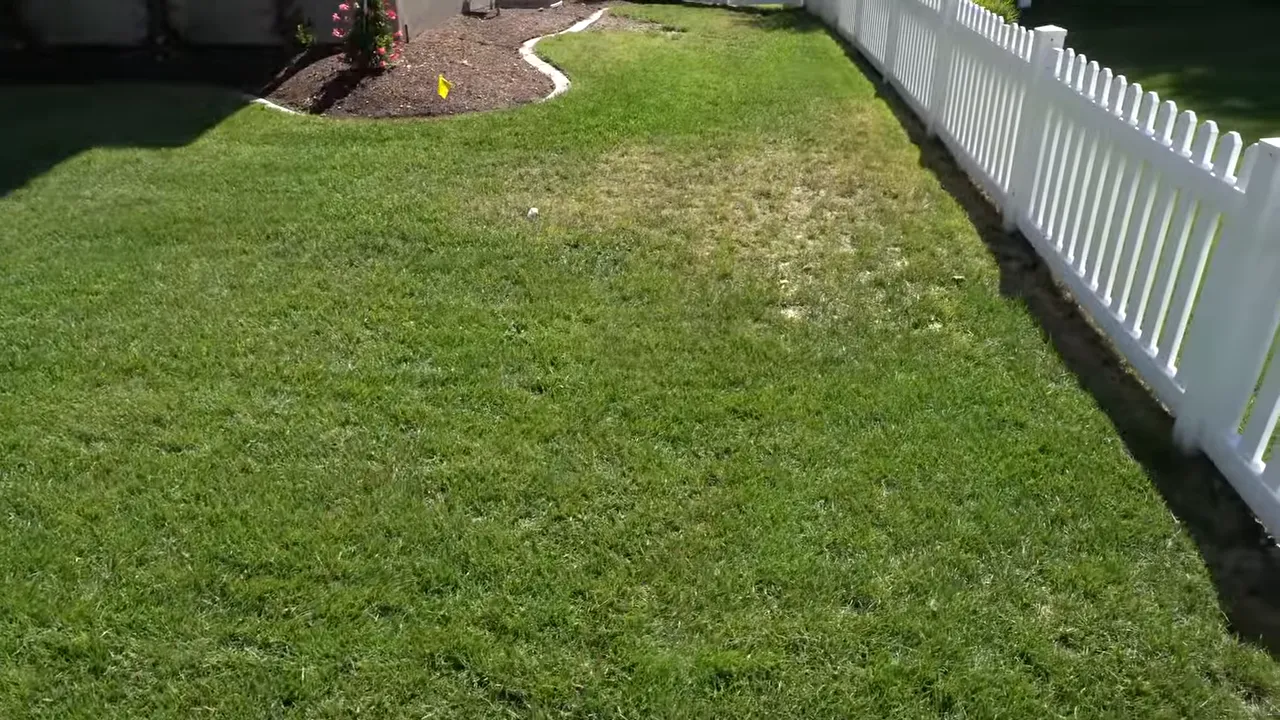
- Uniform damage: browning or stress spread pretty evenly across a large section of lawn. This usually points to drought, irrigation issues, or disease — not grubs.
- Random, patchy damage: irregular spots scattered across the lawn with no clear boundary. This is the grub signature. It can look almost like a “cheetah print” — green turf with random stressed patches mixed in.
Now here’s what I want you to keep in mind: random stress doesn’t automatically mean grubs. It can also be drought, poor sprinkler coverage, or even chinch bug activity. That’s exactly why you don’t stop at pattern recognition. You’ve got to do the pull test.
Step 2: The Pull Test — The Fastest Way to Know for Sure
This is the one I always tell homeowners about. It takes about ten seconds and it tells you exactly what’s happening at the root level. Don’t yank — you’re trying to gather information, not rip out the lawn.
Here’s how to do it
- Get down near a stressed patch. Make a “bear claw” with your hand and grab a fistful of grass.
- Tug firmly but controlled — not a full yank.
- Watch what happens and look at what’s left behind.
What the results mean
- Grass holds firm: the roots are still intact. Your problem is probably environmental — drought stress or irrigation gaps are the most common culprits here in Connecticut summers.
- Grass pulls up easily with bare soil visible: something has been feeding on the roots. Grubs are the most likely cause. Time to dig a little deeper (literally).
- Roots are there but stress is visible: you might be looking at sod webworm or cutworm. These caterpillars can be tiny — smaller than you’d expect — and they feed above the soil line, not below it. Different pest, different treatment.
- Turf lifts like a rolled-up carpet: significant grub damage. The root system has been compromised across a larger area.
I tell our customers in Franklin and the surrounding towns to get in the habit of doing random pull tests every week or two during May through August. Catching this early — before that carpet-pulling stage — saves a lot of money and a lot of lawn.
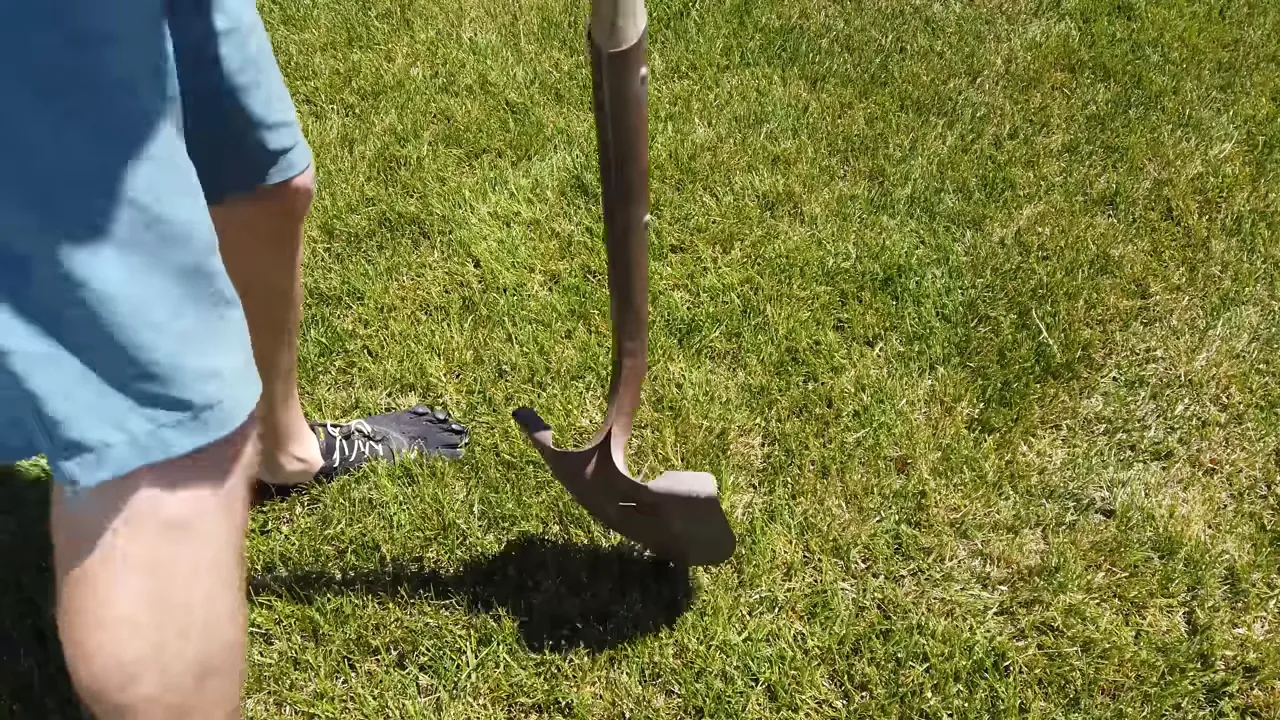
If you’ve got one stubborn spot you keep checking and still can’t get a clear answer, grab a shovel and cut a 6-to-8 inch core plug out of that area. You’ll be able to see the root zone, the thatch layer, and whether there’s any insect activity happening underground. You can often press the plug back in and it’ll recover fine.
Step 3: Treat and Repair — You’ve Got Two Jobs Now
Once you’ve confirmed grub activity, you’re dealing with two separate tasks at the same time: stopping the active feeding, and getting the lawn back on its feet. You have to do both. I’ve seen homeowners treat the insects and then just wait, and the lawn struggles all summer because nobody gave it what it needed to recover.
Stopping the active infestation
For confirmed active grub damage, you want a curative product — something designed to knock down the grubs that are currently in the soil and feeding. There are granular options that work quickly and cover the lawn effectively. The key thing here that a lot of people miss: you have to cover the whole lawn, not just the damaged spots. Grubs move. They don’t stay put in the brown areas. Partial coverage is one of the main reasons treatments seem to fail when really they just weren’t applied broadly enough.
At American Landscape & Lawn Science, our grub control is a preventive systemic application — the grass takes it up through the roots, so if grubs start feeding, they ingest the product and it stops them cold. Our product is also pollinator-friendly, which matters a lot to families with gardens and flower beds nearby. Every product we use is water-based and approved for immediate re-entry once dry. That’s something I’m proud of.
Repairing the damaged turf — don’t skip this
Stressed turf after a grub infestation sometimes looks oddly bright or fluorescent — that’s the grass under stress, and it’s your signal to push recovery. This is where a lot of DIY attempts fall short. People treat the bug but don’t support the grass, and the lawn never really comes back the way it should.
- Bio-stimulants help restart growth — ingredients like humic acid, kelp, and amino acids help the turf push new roots and recover from the feeding damage below.
- Match your fertilizer to the damage type. Grub damage is root damage, so you want to emphasize phosphorus and potassium to support root recovery — not just nitrogen for top growth.
- Don’t pull out turf that isn’t 100% dead. This one drives me a little crazy when I see it. Grass that looks rough after insect damage can often come back with the right support. Give it a fighting chance before you rip it out and reseed.
Step 4: Prevention — This Is Where the Real Win Is
If you’ve dealt with grub damage before, prevention is what keeps you from going through this every year. In my experience, curative treatments are a reaction — prevention is the strategy. And in Connecticut especially, timing is everything.
Know your pest, know your timing
Not all grubs follow the same calendar, and this is where generic advice can get people into trouble. Here’s how the two most common culprits in our area operate:
- Billbugs — tend to lay eggs in May. A preventive systemic applied in May travels through the plant before the larvae start feeding in early summer. This timing matters. Miss it and you’re playing catch-up all season.
- Japanese beetles — these are the ones causing the most headaches in Eastern Connecticut. Adults emerge in summer, lay eggs in July, and the first feeding damage from the new grub generation typically shows up in August and September. That’s why our grub control application is timed for summer — applied before hatch, not after the damage appears.
We’re also the University of Connecticut soil testing lab’s biggest customer — that’s not a throwaway line. It means we’re constantly calibrating our programs against real local science, not guesswork. When we schedule a grub control application for your lawn in Norwich, Franklin, or Colchester, the timing isn’t pulled out of the air.
Organic prevention options worth knowing about
For customers who prefer an organic approach — and we have a lot of them — there are two options worth discussing:
- Milky spore — a naturally occurring organism that affects Japanese beetle grubs specifically. Takes two to three years of repeated applications to build consistent population control in the soil. Works best when grub pressure is dense enough for it to spread.
- Beneficial nematodes — microscopic roundworms that are applied to the soil and attack grubs naturally. These need to be applied correctly (right species, right moisture conditions) to be effective, but they’re a solid tool in the organic toolbox.
Mistakes I See Connecticut Homeowners Make Every Year
After 41 years of lawn care across Eastern Connecticut, I’ve seen the same mistakes play out hundreds of times. I’d rather tell you now than have you find out the hard way:
- Treating the brown spots only. Grubs are feeding well outside the visible damage. Spot-treating doesn’t cover the problem.
- Assuming it’s grubs without doing the pull test. Drought stress looks almost identical. Misidentifying the problem means wasting product on the wrong thing.
- Waiting until August to ask about prevention. By then, the eggs are already in the ground and feeding has started. Prevention has to happen before that window.
- Skipping the lawn recovery step. Treating the insect without helping the grass rebuild is like fixing the leak but never cleaning up the water damage. The lawn needs support to come back.
- Thinking one application covers it forever. Grub pressure is a seasonal reality in Connecticut. A consistent, well-timed program is how you stay ahead of it year after year.
Your Connecticut Grub Action Checklist
- ✅ Walk the lawn and identify the damage pattern — random or uniform?
- ✅ Do pull tests in the stressed areas — does the turf lift easily?
- ✅ If roots are gone, confirm insect type before treating
- ✅ Apply curative product edge-to-edge — not just the brown spots
- ✅ Support recovery with bio-stimulants and root-building fertilizer
- ✅ Schedule preventive grub control before peak egg-laying season (May–July depending on species)
- ✅ Do pull tests every 1–2 weeks from May through August as a routine check
Let Us Handle It for You | Lawn Care Connecticut
Look — this stuff takes time to learn, and honestly, by the time most homeowners figure out they have a grub problem, the damage is already done. That’s exactly why grub prevention is built right into our All-American Lawn Care Program. It’s a preventive, systemic application timed specifically for our Connecticut pest calendar — not a generic schedule from a bag of something you bought at the hardware store.
With a 90% program retention rate and over 3,000 active clients across Eastern Connecticut, I think that speaks for itself. Our customers in Norwich, Franklin, Colchester, Lebanon, Lisbon, Preston, and surrounding communities trust us to stay ahead of these problems so they don’t have to think about them. That’s the whole point of a full-season program.
If you’re seeing patchy brown spots this spring and you’re not sure what you’re dealing with, give us a call. We’ll come out, take a look, and tell you exactly what’s going on — no guessing, no unnecessary products.
📞 Call us: (860) 642-9966
🌐 Visit us: lawnscience.com
📍 Serving Eastern Connecticut including Norwich, Franklin, Colchester, Lebanon, Lisbon, Preston, and surrounding towns
Monday – Friday: 8AM–5PM
— Steve Bousquet, Owner | American Landscape & Lawn Science