
The Right Way to Winterize Your Connecticut Lawn (Timing Is Everything)
Hey there, I’m Steve with American Landscape & Lawn Science, and with temperatures dropping and some areas already seeing their first snow, I’ve been getting a lot of questions about winterizer applications. After 41 years working on Connecticut lawns, I can tell you that this final feeding of the year is one of the most important things you can do for next spring’s lawn.
I recently watched a great video from Ryan Knorr Lawn Care that covers this topic perfectly, and it reminded me of all the conversations I have with customers around Madison and Norwich this time of year. Everyone wants to know: When exactly should I put down that last application, and what should I use?
Let me walk you through how we handle winterizer applications based on decades of experience with Connecticut’s unpredictable fall weather.
What Winterizing Actually Does for Your Lawn
Here’s what’s happening when you apply that late-season fertilizer: The grass has stopped putting energy into top growth, but it’s still actively taking in nutrients. Where do those nutrients go? Straight into the root system.
When you hit the lawn with nitrogen at this stage – after growth slows but before full dormancy – you’re essentially loading up the roots with stored energy for next spring. Come April, that stored energy translates to earlier green-up and a thicker, healthier lawn right out of winter.
I’ve seen this play out thousands of times over my career. Lawns that get proper winterizer applications green up noticeably faster in spring and just look better overall compared to properties that skip this final feeding.
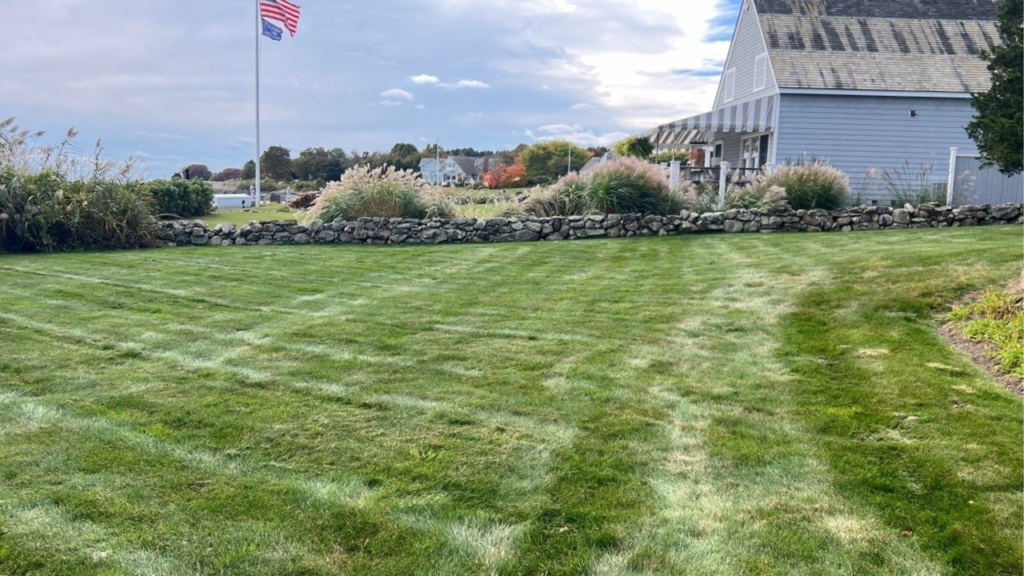
Timing Your Winterizer Application in Connecticut
This is where a lot of folks get confused, and I understand why. Connecticut weather can be all over the place in fall. Some years we’re still mowing in early November, other years we get early snow in late October.
Don’t go by specific calendar dates – watch your weather forecast and your grass. Here’s what I look for:
When temperatures consistently hover around the upper 40s for a week to ten days, and there’s no warming trend coming after that, the grass is naturally slowing down. That’s your window.
You’ll notice you’re not mowing as frequently anymore. When you do mow, there’s not much coming off. The grass is telling you it’s ready to shut down for winter – that’s exactly when you want to get your winterizer down.
For most of Connecticut, this usually hits sometime in November. Coastal properties around Madison and Clinton might push a bit later since temperatures stay milder near the water. Inland areas around Norwich and Franklin typically cool down earlier.
What If You Already Got Snow?
If you’ve already seen snow and your forecast shows nothing but cold temperatures ahead with no warm-up, you’re probably out of luck for winterizing this year. Hopefully you got some fall fertilizer down earlier in the season.
If you missed the window completely this year, don’t panic. Just plan to start your spring fertilizer program a bit earlier next year, but go light on that first application. Spring grass already wants to grow like crazy on its own – you don’t need to push it hard with heavy nitrogen and end up mowing every other day.
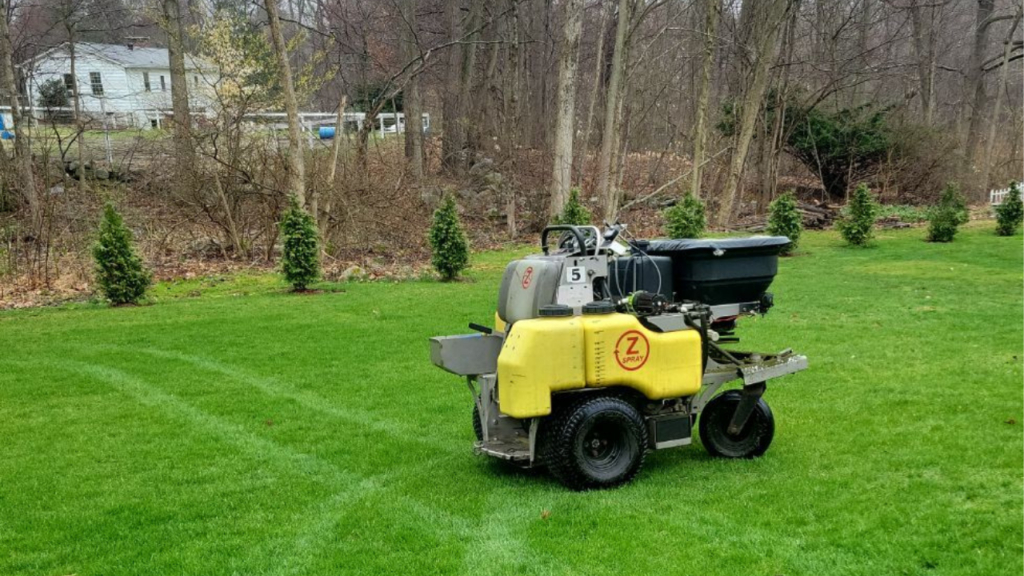
What Fertilizer to Use for Winterizing
I’m not going to tell you there’s only one product that works. The key is understanding what you’re looking for, then finding something that fits your budget.
Look for these characteristics:
- High nitrogen – That’s what feeds the roots
- Minimal slow-release – You want quick-release nitrogen that the grass can use now
- Readily available – End of season, whatever you can find at local stores works
I’ve used products from Menards, Lowe’s, and other big box stores for winterizer applications with good results. Just flip the bag over and check the analysis. You’re looking for something with decent nitrogen percentage and as little slow-release as possible.
Here’s why slow-release doesn’t make sense this late: If the nitrogen is sitting on the soil through winter releasing slowly, it’s likely just washing away before the grass can use it. That’s wasteful for your wallet and not great for the environment either.
Some folks use straight urea (high nitrogen, quick-release), and that works fine. Just make sure you water it in if you’re not expecting rain, since there’s a small chance of burning with those high-nitrogen synthetics if they sit on the grass blades.
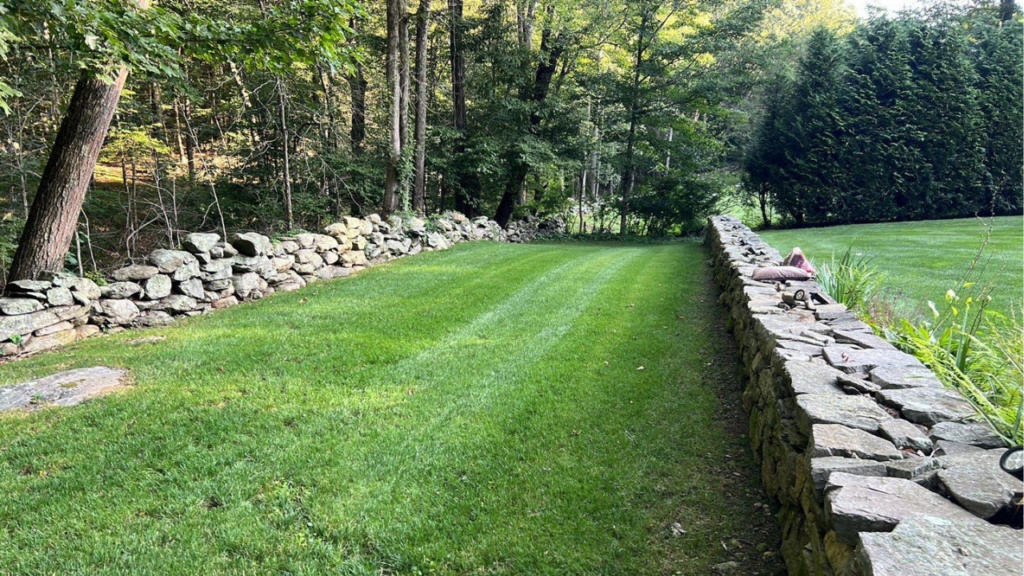
How Much to Apply
Most bags will give you a recommended rate, and following that is usually fine. Let me break down the math so you understand what you’re actually putting down.
Let’s say your bag recommends 3.2 pounds per thousand square feet, and it’s got 20% nitrogen. Take 3.2 times 0.20, and you get 0.64 pounds of actual nitrogen per thousand square feet. That’s a good winterizer rate.
If you’ve been fertilizing consistently all year, you can go on the lighter side – maybe half a pound of nitrogen per thousand square feet. If this is your first application all year (which isn’t ideal, but life happens), you can push closer to a full pound.
For Connecticut lawns that have been on a regular fall program, I typically recommend somewhere between half and three-quarters pound of nitrogen for the winterizer application. That gives good results without overdoing it.
My Approach with Connecticut Properties
Over 41 years working with Connecticut soil conditions and climate, here’s what I’ve found works best:
I use synthetic fertilizers for winterizer applications because they’re cost-effective and deliver nitrogen efficiently at this time of year. We’re not worried about building organic matter right now – we’re focused on getting nitrogen into those roots before dormancy hits.
I always check the soil test results first though. If your soil pH is off or you’re missing key nutrients, throwing nitrogen at the problem won’t fix it. That’s why we partner with the University of Connecticut soil testing labs – it takes the guesswork out of the equation.
The Simple Winterizing Timeline
Here’s how to think about it:
- Watch your grass – When mowing frequency drops way off, you’re getting close
- Check the forecast – Look for consistent upper 40s with no warming trend
- Apply fertilizer – Use a quick-release product at appropriate rate
- Water it in – If no rain is coming, water lightly to activate
- Call it a season – You’re done until spring
Don’t overthink this. It’s one application at the right time with the right product. That’s all it takes to see significant improvement next spring.
What This Means for Your Spring Lawn
Proper winterizer application is like giving your lawn a head start for next year. When April rolls around and your neighbors’ lawns are still looking brown and struggling, yours will be greening up and filling in.
You’ll need less work in spring – less overseeding, less bare spot repair, just healthier grass that’s ready to grow. After doing this for over four decades, I can tell you it’s absolutely worth the effort of that one final application.
Don’t Let This Window Close
Here’s the thing – you’ve got maybe a two or three week window to get this right. Once temperatures drop below the low 40s consistently and the grass goes fully dormant, it’s too late. The grass won’t take up the fertilizer, and you’re just wasting money.
If you’re reading this in late October or early November, and your grass is still showing slight growth, you’re probably right in that sweet spot. Get that winterizer down now while conditions are right.
Let Us Handle Your Winterizer Application
If you want to make sure this gets done right with proper timing and the right products, we’ve been helping Connecticut homeowners with end-of-season lawn care since 1983.
Here’s what we provide:
- Expert timing based on local weather patterns and grass conditions
- Proper product selection using quick-release nitrogen formulations
- Professional application ensuring even coverage and proper rates
- Science-based approach backed by UConn soil testing
- Complete fall programs including fertilization, soil amendments, and winterization
We serve properties throughout eastern Connecticut from our Madison and Norwich locations. After 41 years working in this area, we understand the differences between coastal and inland properties and adjust our programs accordingly.
Give us a call or visit lawnscience.com to schedule your winterizer application. We monitor weather conditions constantly and time applications for optimal results. No guesswork, no wasted product, just proven methods that deliver results.
Over 3,000 satisfied customers trust us year after year because we’re neighbors who’ve been working Connecticut lawns for over four decades. We’re not going anywhere, and we have a real stake in keeping our communities looking great.
The bottom line? That final winterizer application is your investment in next spring’s success. Don’t let the window close – get it done while conditions are right, and you’ll see the payoff when warm weather returns.
Follow Us for More Lawn Care Tips
Get FREE Grub Control
when you sign up for our 5-Step Lawn Care Program.
