
Spring Pre-Emergent Applications: What Norwich Homeowners Need to Know
Hey folks, Steve Bousquet here from American Landscape & Lawn Science. I recently watched a helpful video from Lanier Outside about stopping crabgrass before it starts, and while the guy knows his stuff when it comes to Bermuda lawns down south, things work pretty differently here in Norwich and throughout Eastern Connecticut. We’re dealing with cool-season grasses—mostly fescue and Kentucky bluegrass blends—not Bermuda, and that changes everything about timing and product selection for pre-emergent applications.
Video and screenshots are used for commentary and educational purposes. Lanier Outside is not affiliated with or endorsing American Landscape & Lawn Science.
Why Norwich Lawns Need a Different Approach
The video focuses on Bermuda grass in warmer climates where the lawn goes dormant in winter and greens up in spring. That’s not what we’ve got around here. In Norwich, Franklin, Lisbon, and Preston, most lawns are cool-season grasses that stay green all year—or at least they’re supposed to. Our grass is actively growing in spring when we’re applying pre-emergent, which means we can’t just throw down a bare crabgrass preventer and call it good.
Connecticut soil temps hit that magic mid-50s mark right around the time forsythia starts blooming—usually late March or early April depending on the year. But unlike down south where they’re waiting for Bermuda to wake up, our lawns are already awake and hungry for nutrients. That’s why our spring applications need to do double duty: prevent crabgrass and feed the existing turf at the same time.
Getting Your Lawn Measurements Right
The video’s got this part dead-on—you need to know your square footage before you buy anything. I can’t tell you how many times I’ve shown up to properties around Norwich where homeowners have either bought way too much product or not nearly enough because they guessed at their lawn size.
Here’s what we do professionally: we use satellite imagery and town tax maps to get exact measurements down to the square foot. For a typical Norwich residential property—maybe 5,000 to 8,000 square feet of actual turf—you’re looking at specific product amounts based on label rates. Most pre-emergent products call for a certain number of pounds per 1,000 square feet, and if you’re off on your measurements, you’re either wasting money or leaving gaps in coverage.
If you’re doing this yourself, break your yard into sections—front, back, sides—measure the length and width of each, multiply, and add them up. Don’t count hardscaping, gardens, or driveways. Just the grass areas you’re actually treating.
Soil Temperature Is Everything—But We Read It Differently
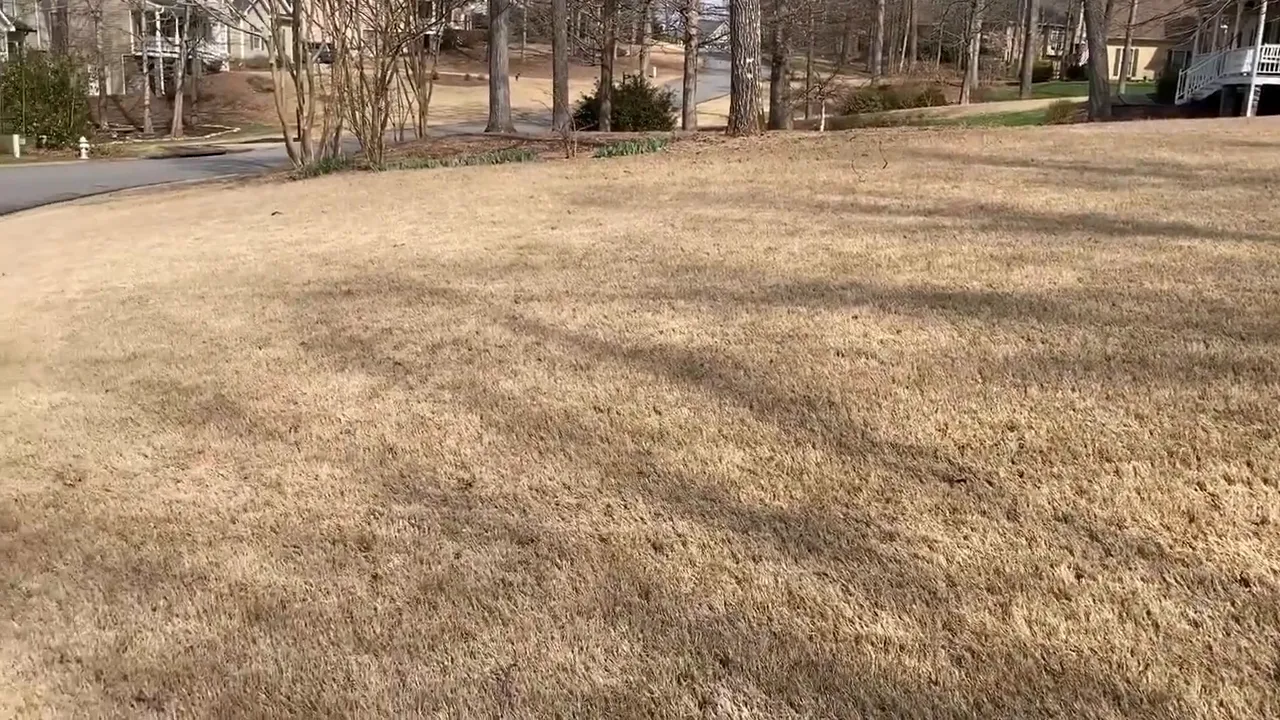
The video talks about watching soil temps hit the mid-50s and climbing, and that’s absolutely correct for crabgrass germination. When soil temps consistently stay above 55 degrees for a few days in a row, that’s your signal that crabgrass is about to germinate. But here’s where Norwich lawns are different from what you’re seeing in that video.
We’re not just concerned about crabgrass timing—we’re also feeding actively growing turf. After 41 years of doing this work from Franklin to Groton, I’ve learned that our application window is tighter than you’d think. Too early and you’re wasting product because the soil’s too cold for anything to happen. Too late and crabgrass has already germinated in those warm spots along south-facing foundation walls or next to driveways and sidewalks.
For Norwich and the surrounding areas, I’m usually doing first applications in late March or the first two weeks of April. Some years it’s earlier if we’ve had a warm February and March. Other years—like when we get snow in April—it pushes later. The key is checking those soil temps and watching local weather patterns, not just going by a calendar date.
Product Selection for Connecticut Cool-Season Lawns
Here’s where I have to disagree with the video’s advice about skipping nitrogen. That might work fine for dormant Bermuda, but it doesn’t work for us. Our cool-season grasses in Norwich, Lebanon, and Colchester are actively growing in early spring. They’re coming out of winter stress, they’ve been beaten up by freeze-thaw cycles, and they need nutrients to thicken up before summer heat arrives.
What we use—and what I’d recommend for homeowners tackling this themselves—is a combination product that includes both the pre-emergent crabgrass preventer and a balanced fertilizer. You’re feeding the existing turf while creating that chemical barrier in the soil that stops crabgrass seeds from germinating. It’s more cost-effective than two separate applications, and it gives you better results because you’re strengthening the grass you’ve already got.
Now, I won’t put anything on a customer’s lawn that I wouldn’t use on my own property at home. Everything we apply is water-based, not petroleum-based, which matters for families with kids and pets. Our products dry within an hour or two, and then everybody can get back to using the yard normally. That’s important around here because people want to be outside in spring after being cooped up all winter.
Application Technique That Actually Works
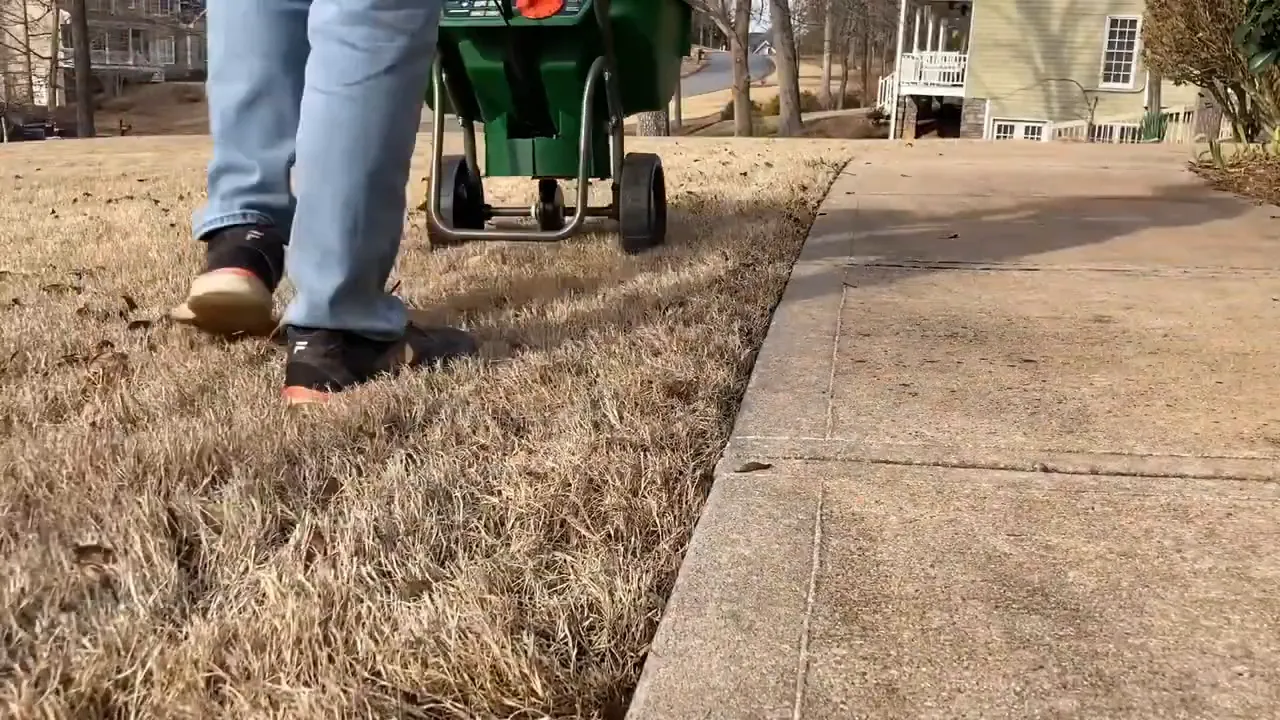
The video shows using a broadcast spreader and doing a trim pass first, which is exactly right. That’s how we do it professionally, and it’s the best method for homeowners too. You walk the perimeter of your lawn with the spreader, treating all the edges first, then you fill in the middle with overlapping passes.
Where I see mistakes around Norwich is people not calibrating their spreaders properly. Every spreader throws product differently depending on the brand, how old it is, and what setting you’re using. The bag will give you a suggested spreader setting, but that’s just a starting point. You need to actually measure how much product you’re putting down to make sure you’re hitting that label rate.
Here’s what we do: weigh out the exact amount of product needed for the area you’re treating, put it in the spreader, and then make sure the hopper’s empty when you’re done. If you’ve got product left over, your setting’s too low and you didn’t apply enough. If you run out before you finish, your setting’s too high and you over-applied in the areas you covered. It takes some practice to dial it in, but it’s worth getting right.
Watering In and Post-Application Care
The video’s right about watering in your pre-emergent. You need some moisture to activate the product and move it into the top layer of soil where crabgrass seeds germinate. But timing matters, especially in Connecticut where we can get heavy spring rains.
Ideally, you’re applying when there’s light rain in the forecast within 24 to 48 hours. That’s enough to activate the product without washing it away. If we get one of those spring downpours—two or three inches in a short period—right after application, you might lose some effectiveness. Not the end of the world, but not ideal either.
For homeowners with irrigation systems, a quarter inch of water is usually enough. If you’re relying on rainfall, just keep an eye on the forecast and try to time your application accordingly. And always apply to dry grass—not wet from dew or recent rain—because the product needs to stick to the soil, not roll off wet grass blades.
Common Mistakes I See Around Norwich Every Spring
After working with over 3,000 customers throughout Eastern Connecticut, I’ve seen just about every pre-emergent mistake you can make. The biggest one? Waiting too long to apply. People think they’ve got all spring to get this done, and then they’re calling us in May wondering why their lawn’s full of crabgrass. By that point, the seeds have already germinated and you’re in reactive mode instead of preventive mode.
Another thing I see constantly—especially in areas like Franklin and Lebanon where folks have more acreage—is uneven application. They’ll eyeball their spreader passes instead of overlapping properly, and then they’ve got stripes of crabgrass three months later exactly where they missed. Pre-emergent only works where it lands, so coverage has to be complete.
And here’s one that drives me crazy: people applying pre-emergent when they know they’re going to aerate or overseed in a few weeks. Pre-emergent stops all seeds from germinating, including grass seed. If you’re planning mechanical aeration and overseeding, that needs to happen either before pre-emergent goes down or you need to wait until fall. I’ve seen homeowners waste money on both products because they didn’t understand that timing conflict.
Setting Expectations for First-Year Results
If this is your first year applying pre-emergent to a property that’s never had it before—or hasn’t had it consistently—don’t expect perfection. Every lawn has a seed bank in the soil from years of crabgrass dropping seeds. Even with a good pre-emergent application, you’ll see some breakthrough, especially in high-stress areas like along driveways or in compacted spots.
The key is consistency. After two or three years of proper spring applications through our lawn care program, that seed bank gets depleted and crabgrass pressure drops significantly. That’s what we’ve seen with our 90% customer retention rate—people stick with us because they see year-over-year improvement, not overnight miracles.
Your Spring Pre-Emergent Checklist for Norwich Lawns
Here’s what I’d recommend for homeowners in Norwich, Franklin, Lisbon, Preston, and surrounding areas:
- Measure your lawn accurately—know your square footage before buying product.
- Monitor soil temps in late March; when they’re consistently mid-50s and climbing, you’re in the application window.
- Choose a combination pre-emergent with fertilizer for cool-season Connecticut grasses—don’t skip the nitrogen.
- Calibrate your spreader so you’re applying the correct rate per 1,000 square feet.
- Apply to dry grass, doing perimeter first, then overlapping passes in the middle.
- Water in with light irrigation or wait for gentle rain; avoid application right before heavy storms.
- Keep records—note the date, product used, and rate so you can replicate success next year.
- Plan your second application for late May or early June to catch any late-germinating crabgrass.
Why Two Applications Work Better Than One
The video focuses on that first spring application, but around Norwich we typically do two pre-emergent treatments per season. That first one in early spring catches the main flush of crabgrass. The second application in late spring—usually late May or early June—extends that protection through the summer and catches any late-germinating seeds that the first application missed.
This is especially important in Connecticut because our spring weather is unpredictable. If that first application gets partially washed away by heavy rain, or if we have a cool April followed by a hot May, that second application fills in the gaps. It’s one of the reasons our customers see such good results—we’re not relying on a single application to carry the entire season.
Professional Norwich Lawn Care That Prevents Problems Before They Start
Look, I get it—spring pre-emergent applications aren’t complicated in theory, but getting the timing, product selection, and coverage right takes experience. After 41 years of doing this in Connecticut, I can tell you the lawns that stay consistently thick and weed-free are the ones getting proper preventive care, not just reactive treatments when problems show up.
If you’re in Norwich, Franklin, Lisbon, Preston, Lebanon, Colchester, or anywhere in Eastern Connecticut and you’d rather have professionals handle your spring applications, that’s exactly what we do. We’ve built American Landscape & Lawn Science on consistent results and treating every customer’s property like it’s our own. Our team performs thousands of precise applications every year, and many of our technicians have over 20 years of experience working specifically with Connecticut cool-season grasses.
We serve Norwich, Franklin, Lebanon, Lisbon, Preston, Colchester, Groton, Mystic, and communities throughout Eastern Connecticut with organic-based programs that are water-based and safe for your family and pets. With over 100 five-star reviews and a 90% customer retention rate, we’ve proven that doing it right the first time costs less than fixing problems later.
Ready to get your lawn on a real program that prevents crabgrass instead of chasing it all summer? Give us a call at (860) 887-2344 for our Norwich location or (860) 642-9966 for our Franklin office. You can also visit us online at lawnscience.com for a free lawn assessment. We’ll measure your property, evaluate your specific conditions, and give you a straightforward quote with no pressure and no gimmicks.
American Landscape & Lawn Science
Serving Norwich, CT and Eastern Connecticut since 1983
Norwich Location: 43 Gulliver Circle, Norwich, CT 06360 | Phone: (860) 887-2344
Franklin Location: 766 CT-32, North Franklin, CT 06254 | Phone: (860) 642-9966
Website: lawnscience.com
Over 100 five-star reviews | 90% customer retention rate | 3,000+ satisfied customers | 40% referral rate
Follow Us for More Lawn Care Tips
Get FREE Grub Control
when you sign up for our 5-Step Lawn Care Program.
