


February Lawn Care in Madison: Getting Your Lawn Ready for Spring
Hey there, I’m Steve Bousquet, owner of American Landscape & Lawn Science here in Madison. I recently came across a helpful video from TRUGREEN IN ACTION that covers February lawn treatments, and while it’s got some solid advice, things work a bit differently here on the Connecticut shoreline than they might in other parts of the country. After 41 years of working with lawns from Madison to Clinton, Guilford, and throughout Eastern Connecticut, I’ve learned what February treatments actually make sense for our specific climate and soil conditions.
Video and screenshots are used for commentary and educational purposes. TRUGREEN IN ACTION is not affiliated with or endorsing American Landscape & Lawn Science.
Why February Lawn Care Matters in Madison
A lot of folks around Madison think the lawn season doesn’t really start until April or May, but that’s leaving opportunity on the table. Here in Connecticut, February is when I start prepping lawns for what’s coming. Our coastal climate means we get those early warm spells mixed with freezing temps, and that cycle can be tough on turf if you’re not paying attention.
The Madison area has its own challenges—sandy loam soil near the shore, heavier clay content as you head inland toward Durham Road, and everything in between. Plus, we get a lot of foot traffic on lawns throughout the winter from folks who don’t put their yards to bed like they should. That compaction shows up real fast come spring if you haven’t addressed it early.
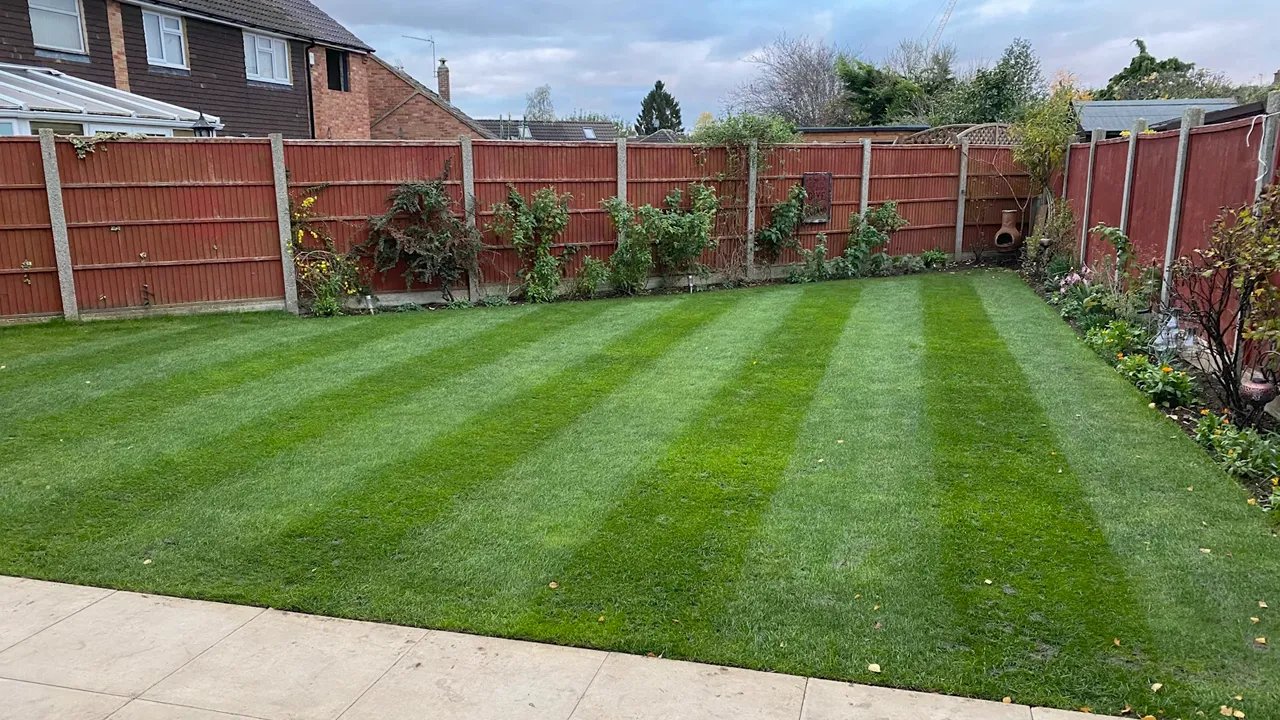
What to Look For on Your Madison Lawn Right Now
When I’m doing property evaluations around Madison this time of year, I’m looking for a few specific things. First off, worm casts are everywhere—those little dirt piles that earthworms leave on the surface. They’re actually a good sign because it means you’ve got healthy biological activity happening in your soil, but they’ll mess up your first mow of the season if you don’t deal with them.
Second thing I see a lot, especially in shaded areas near the water or under tree cover, is moss creeping into thin spots. Now’s not the time to go after it aggressively—mechanical removal and overseeding comes later in March or April when soil temps are more stable. But you want to note where it is so you can address it properly when the time’s right.
The grass itself isn’t growing much yet. We might hit 50 degrees one day, but we’re back to freezing the next. That means you’re not trying to force growth with heavy nitrogen applications. You’re just giving the turf a gentle nudge to wake it up and start building root mass.
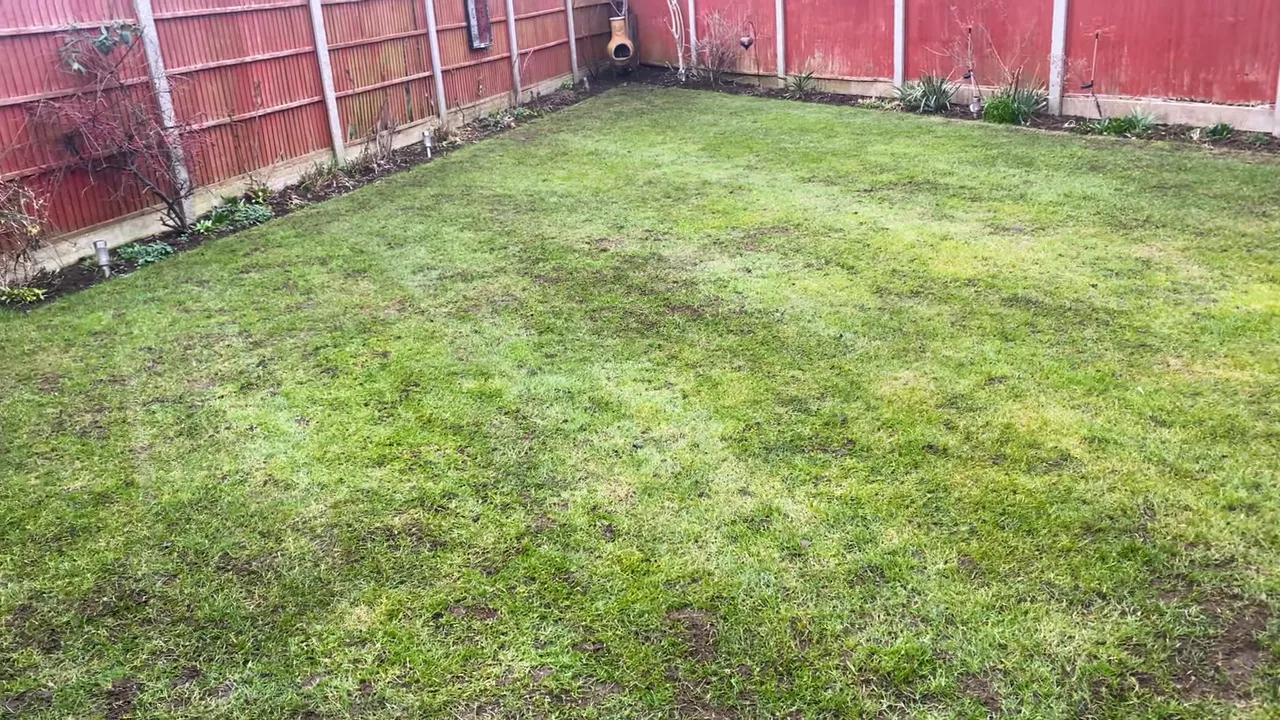
Dealing With Worm Casts Before Your First Mow
Here’s the deal with worm casts—if you mow over them without raking first, you’re just spreading all that dirt across your lawn in clumps. Then you’ve got smothered grass and an uneven surface that makes the next mow even worse.
The fix is simple: grab a leaf rake and knock those casts down before you fire up the mower. Takes maybe 10 minutes for a typical Madison yard, and it saves you a ton of headaches. I do this on my own lawn at home before I treat it, and it’s the same thing we do for our customers in Guilford, Clinton, and everywhere else we service. It’s just basic lawn maintenance that makes a difference.
Why I Mow Before Applying Liquid Treatments
One thing the video gets right is mowing before you spray. When I’m doing applications around town—whether it’s on East Shore Avenue or over by the Hammonasset connector—I need to see clean lines on the turf so I know I’m getting even coverage.
A fresh mow creates visible stripes that act like guide rails when you’re walking with a sprayer. You’re not guessing where you’ve been, and you’re not doubling up on product in some spots while missing others entirely. For homeowners doing this themselves, even a basic rotary mower set at the right height will do the job. You’re just trying to create a clean, uniform surface for the treatment to land on.
The Right Liquid Fertilizer for Connecticut Lawns in February
Now, the video talks about balanced liquid fertilizers, and that’s on the right track. But here in Madison and throughout Connecticut, I’m careful about what I’m putting down this early. You don’t want to push a bunch of tender top growth when we’ve still got hard freezes coming. That’s how you end up with winter kill and thin spots in March.
What I like to use—and what we apply for our 3,000+ customers—is a liquid feed that’s got a balanced nitrogen content, a good iron component for color, and some amino acids and carbohydrates to wake up the soil biology. Those microbes in your soil have been dormant all winter, and getting them active again is what sets you up for strong growth once spring actually arrives.
The iron gives you that immediate visual response—people love seeing their lawn green up quick—but the real work is happening below the surface. You’re building root mass and improving nutrient uptake, which matters a lot more in the long run than just getting some quick color.
Application Rates and Mixing for Madison Homeowners
If you’re tackling this yourself, here’s what I’d recommend based on what we do professionally. For about 1,000 square feet, mix somewhere between 250 to 500 milliliters of product with 4 to 6 liters of water. If your lawn’s in rough shape with a lot of worm casts, thin spots, or moss issues, lean toward the higher end of that range. If it’s relatively healthy and you’re just doing maintenance, the lower rate works fine.
Now, I’ll be honest—most homeowners don’t have the right equipment to apply this evenly. We’re using commercial-grade sprayers that give us precise coverage, and our guys have been doing this for 20+ years in some cases. If you’re unsure, it’s worth having a professional handle it. We measure every property exactly using satellite imagery and town tax maps, so we know we’re applying the right amount every single time.
Common Mistakes I See Around Madison
After working in this area since 1983, I’ve seen just about every mistake you can make with February lawn care. The biggest one? People trying to treat their lawn like it’s already spring. They’ll throw down a heavy application of synthetic fertilizer, thinking they’re getting a jump on the season, and then they’re confused when the grass looks stressed or burnt a week later.
Another thing I see a lot around the shoreline areas—Clinton, Old Saybrook, Madison—is folks not accounting for salt damage from winter storms. If you’re near the water or on a main road that got salted heavily, that changes what you need to do. You might need a soil amendment or extra watering in those spots before any fertilizer treatment makes sense.
And I can’t tell you how many times I’ve seen people skip the worm cast removal, mow over them, and then wonder why their lawn looks bumpy and uneven all spring. It’s a small thing that makes a big difference.
Follow-Up and Planning for March
Whatever you do in February, plan to check back on your lawn in about 10 to 14 days. You’re looking for color response, density improvement, and whether those worm casts are coming back (they usually do—it’s just part of spring in Connecticut). If the lawn responds well to the liquid feed, that tells you the soil biology is waking up and you’re on the right track.
By late March or early April, depending on weather, that’s when we start thinking about more aggressive treatments—scarifying moss-heavy areas, overseeding thin spots, getting serious about crabgrass prevention, and moving into our full spring program. But February is about setting the foundation. It’s the quiet work that doesn’t look like much but makes everything else easier down the road.
Your February Lawn Care Checklist for Madison
Here’s what I’d recommend for Madison homeowners this month:
- Rake off worm casts before your first mow—don’t skip this step.
- Mow lightly at the correct height to create guide lines for any treatments.
- Apply a balanced liquid fertilizer at 250 to 500 mL per 1,000 square feet, mixed with 4 to 6 liters of water, depending on lawn condition.
- Check your sprayer for leaks and make sure all fittings are tight before you start.
- Plan a follow-up inspection in 1 to 2 weeks to assess color, density, and any problem areas that need attention.
- Make notes about thin spots, moss patches, and salt damage so you’re ready for March renovations.
Why February Prep Matters for Long-Term Lawn Health
Look, I get it—it’s still winter. Nobody’s thinking about their lawn when there’s snow on the ground one day and 45 degrees the next. But the lawns that look best in June and July? Those are the ones that got attention in February. It’s not glamorous work, and your neighbors won’t notice it until a couple months from now, but that’s how you build a lawn that’s dense enough to crowd out weeds, strong enough to handle summer heat, and healthy enough to bounce back from whatever Connecticut weather throws at it.
After serving over 3,000 customers across Madison, Guilford, Clinton, Essex, Old Saybrook, and throughout Eastern Connecticut, I can tell you the difference between a decent lawn and a great one usually comes down to those small, early-season treatments that most people skip. This is what we do every February on our own lawns, and it’s the same approach we take with every customer property we service.
Get Professional Madison Lawn Care That Actually Works
If you’re reading this and thinking you’d rather have someone who knows Connecticut lawns handle the work, that’s what we’re here for. We’ve been doing this since 1983, and we’ve built our business on consistent results and taking care of people the right way. Our 90% customer retention rate and the fact that 40% of our business comes from referrals tells you pretty much everything you need to know.
We serve Madison, Clinton, Guilford, Old Saybrook, Essex, Norwich, Franklin, Groton, Mystic, and communities throughout Eastern Connecticut with organic-based lawn care programs that are water-based and safe for your family and pets. Our team performs thousands of precise applications every year, and many of our technicians have over 20 years of experience working specifically with Connecticut soil and climate conditions.
If you want a free lawn assessment and a customized plan for your property, give us a call at (860) 642-9966 or visit us online at lawnscience.com. We’ll measure your property, evaluate what your lawn actually needs, and give you a straightforward quote with options that make sense for your situation. No high-pressure sales, no gimmicks—just honest lawn care from people who’ve been doing this for over four decades.
American Landscape & Lawn Science
Serving Madison, CT and surrounding communities since 1983
Phone: (860) 642-9966
Website: lawnscience.com
Over 400 five-star reviews | 90% customer retention rate | 3,000+ satisfied customers
Follow Us for More Lawn Care Tips
Get FREE Grub Control
when you sign up for our 5-Step Lawn Care Program.
