

Winter Lawn Care Tips for Connecticut Lawns
Hey folks, Steve here from American Landscape & Lawn Science. I recently came across a helpful video from Green Lawn Fertilizing that covers winter lawn protection, and it got me thinking about what we deal with here in Connecticut. While their advice is solid, our freeze-thaw cycles, clay soils, and unpredictable New England winters mean we need to approach things a bit differently in towns like Madison, Norwich, Clinton, and the rest of Eastern Connecticut.
Video and screenshots are used for commentary and educational purposes. Green Lawn Fertilizing is not affiliated with or endorsing American Landscape & Lawn Science.
Why Connecticut Winter Lawn Care Is Different
After 40-plus years serving families across Eastern Connecticut, I can tell you our winters are tough on lawns in ways that don’t always match up with generic advice. We get those wild temperature swings—40 degrees one day, 15 the next—that stress turf roots. Our clay-heavy soils hold moisture differently than sandier soils in other regions, which means snow mold and compaction issues show up faster here. And let’s be honest, between the plows piling snow along driveways and the amount of salt that gets tossed around, Connecticut lawns take a beating from December through March.
What works in milder climates or out west just doesn’t cut it for our Guilford, Groton, or Old Saybrook properties. The good news? A few simple winter habits can prevent the damage I see every spring—those dead strips along walkways, circular patches of matted grass, and thin areas that take forever to recover.
Choose the Right Deicing Products for Your Lawn
Not all deicers are created equal, and this is where I see Connecticut homeowners make their biggest winter mistakes. Traditional rock salt—sodium chloride—is cheap and effective on ice, but it’s brutal on grass. That salt seeps into our clay soils, builds up over time, and literally burns turf roots. Come spring, you’ll notice those telltale dead strips running along your driveway or sidewalk.
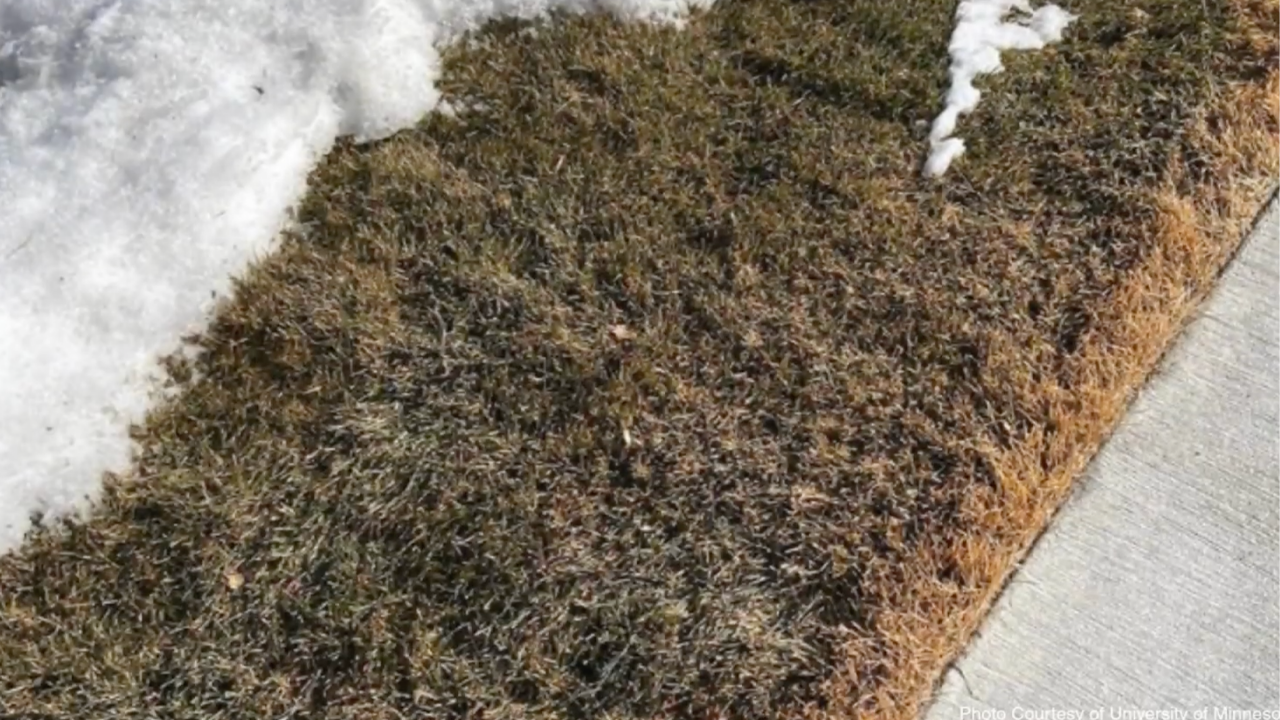
Here’s what I recommend instead:
- Calcium magnesium acetate — It costs more upfront, but it’s way gentler on turf and won’t corrode concrete like straight salt does.
- Products labeled “pet-safe” or “lawn-safe” — These blends typically use less sodium chloride and include buffers that reduce plant damage.
- Sand or kitty litter for traction — Won’t melt ice, but it’s safer for grass and still improves footing on walkways.
Whatever you choose, use the minimum amount needed. More isn’t better—it just means more chemicals washing into your lawn and garden beds when the snow melts.
The Snow Pile Problem We See Every Year
This is something I’ve seen hundreds of times across Madison, Essex, Franklin, and Lebanon properties. Folks shovel or plow their driveways, and all that snow ends up in big piles on the lawn. Those piles sit there for weeks, creating the perfect environment for snow mold—cold, dark, damp, and compacted. By the time the ground thaws, you’re left with circular patches of dead or matted grass that need serious repair work.
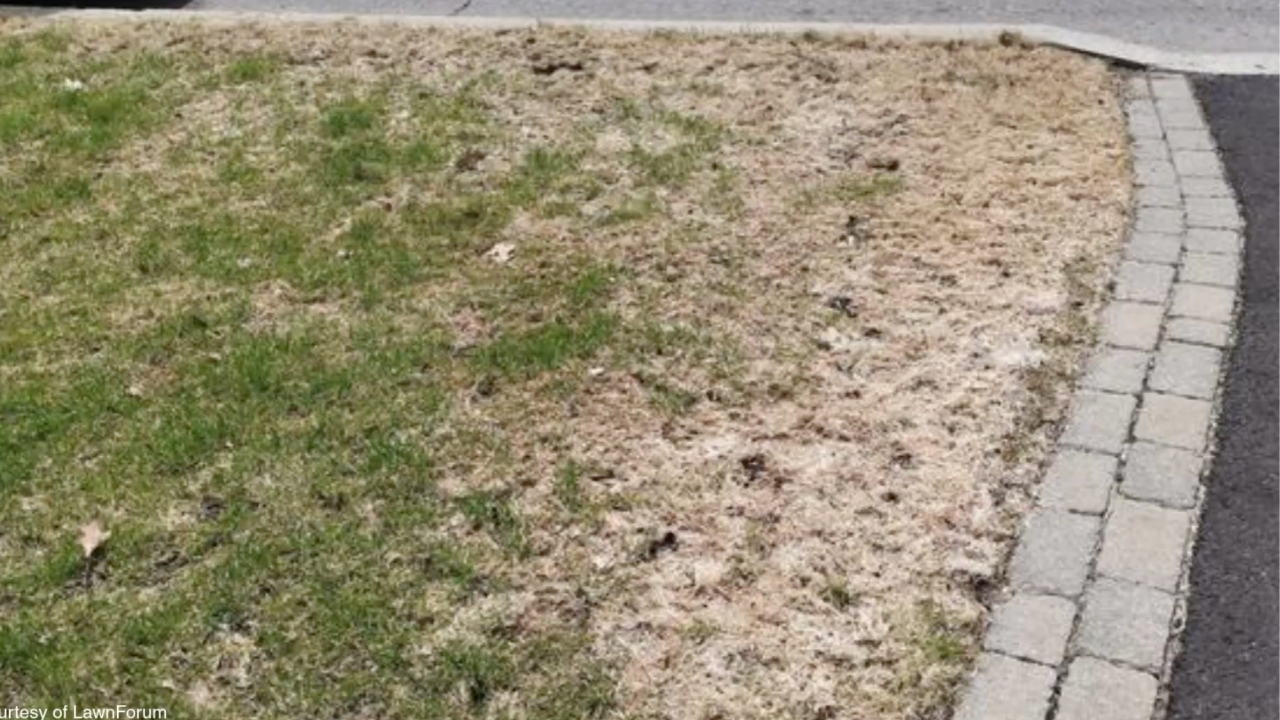
I’m not suggesting you go out and shovel snow off your entire lawn—that’d be nuts. But try to spread snow somewhat evenly when you’re clearing driveways, rather than dumping it all in one concentrated spot. If you end up with big piles anyway, break them apart as soon as temperatures allow. Getting sunlight and airflow to the soil underneath makes a huge difference in preventing fungal issues.
What Snow Mold Looks Like and Why It Matters
Snow mold is a fungal disease that develops under prolonged snow cover or in those wet, cold conditions we get during Connecticut’s transition periods. You’ll notice it in early spring—circular patches of grass that look matted down, discolored, and sometimes covered in a white or grayish mold growth on the surface.
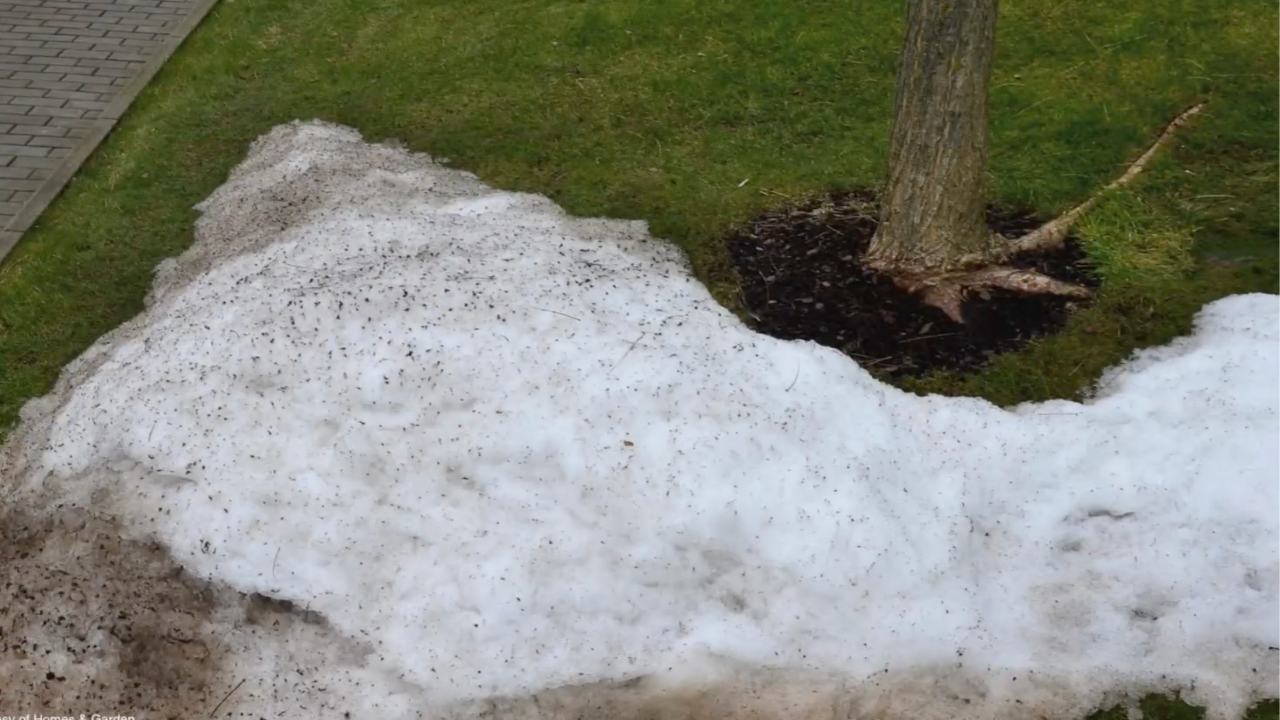
Most lawns will recover on their own once the weather warms up and growth kicks in. But severe cases leave bare or thin spots that need overseeding or more aggressive renovation. With over 8,000 satisfied customers and a 96% retention rate since 1983, I’ve learned that preventing snow mold is a lot easier than fixing it after the fact.
Common Winter Lawn Mistakes I See in Connecticut
Here’s what tends to trip people up every year:
Over-salting everything. I get it—safety comes first. But dumping rock salt everywhere, including onto grass, is overkill. Keep deicing products on paved surfaces only, and sweep up excess when you can.
Ignoring leftover snow piles until it’s too late. By the time you notice the damage in April, the turf underneath has already been smothered for weeks. Breaking those piles apart in late winter saves you repair work later.
Walking or driving on frozen grass. When turf is frozen, the grass blades are brittle and the crowns are vulnerable. Traffic on frozen lawns causes physical damage that shows up as wear patterns come spring.
Forgetting that Connecticut winters are unpredictable. We might get a warm spell in February that melts everything, then a hard freeze in March. That freeze-thaw cycle is brutal on grass roots, especially if the soil is compacted or waterlogged.
Your Connecticut Winter Lawn Checklist
Here’s what I tell folks in Norwich, Mystic, Groton, and throughout our service areas:
- Switch to a lawn-friendly deicer — Avoid heavy salt near grass and garden beds.
- Apply deicing products sparingly — Use only what you need for safety, then sweep up the excess.
- Spread snow evenly when clearing driveways — Don’t pile it all in one spot on the lawn.
- Break apart snow piles in late winter — Get air and sunlight to the soil to reduce snow mold risk.
- Avoid foot and vehicle traffic on frozen turf — Wait until the ground thaws to protect grass crowns.
- Plan spring repairs early — If you notice thin or dead patches, address them before the growing season ramps up.
Get Your Connecticut Lawn Ready for Spring
Small efforts now save you big headaches later. By choosing smarter deicing options and managing snow placement, you’re protecting root health and setting your lawn up for a strong green-up when temperatures rise. After four decades serving Eastern Connecticut families, I can tell you these simple steps make all the difference.
If you’re dealing with salt damage, snow mold, or just want to make sure your lawn comes back strong this spring, we’re here to help. American Landscape & Lawn Science has been taking care of properties in Madison, Norwich, Clinton, Guilford, Groton, Franklin, Lebanon, Essex, Old Saybrook, and Mystic since 1983. Our 96% customer retention rate speaks to the results we deliver year after year.
Give us a call at (860) 642-9966 or visit lawnscience.com to schedule a free lawn assessment. Let’s get your Connecticut lawn through winter and into spring in great shape.
Follow Us for More Lawn Care Tips
Get FREE Grub Control
when you sign up for our 5-Step Lawn Care Program.
