

Should You Keep Watering Your Connecticut Lawn Through Fall? (Yes, and Here’s Why)
Hey there, I’m Steve with American Landscape & Lawn Science, and I know what you’re thinking – it’s late October, the grass is still growing, but do I really need to keep watering? After 41 years working on Connecticut lawns, I can tell you that shutting down your irrigation too early is one of the biggest mistakes homeowners make.
I recently came across a great video from the Turf Mechanic that really nails this topic, and it got me thinking about all the conversations I’ve had with customers here in Madison and Norwich about fall watering. Let me share some insights based on what I’ve learned serving Connecticut properties for over four decades.
Most folks around our area want to button things up and call it a season by mid-October. I get it – you’re ready to be done with lawn care for the year. But those last few weeks of watering can be the difference between a thick, healthy lawn in spring and one with bare patches that needs serious work.
What Happens When You Stop Watering Too Early
Here’s what I’ve seen happen hundreds of times over the years: A homeowner shuts off their irrigation system in mid-October because temperatures are dropping and they figure the grass is done for the year. But the grass is still actively growing – you’re still mowing it, right?
When you cut off the water supply while the grass is still trying to grow, you’re forcing it into dormancy based on drought stress, not natural seasonal timing. That’s a problem.
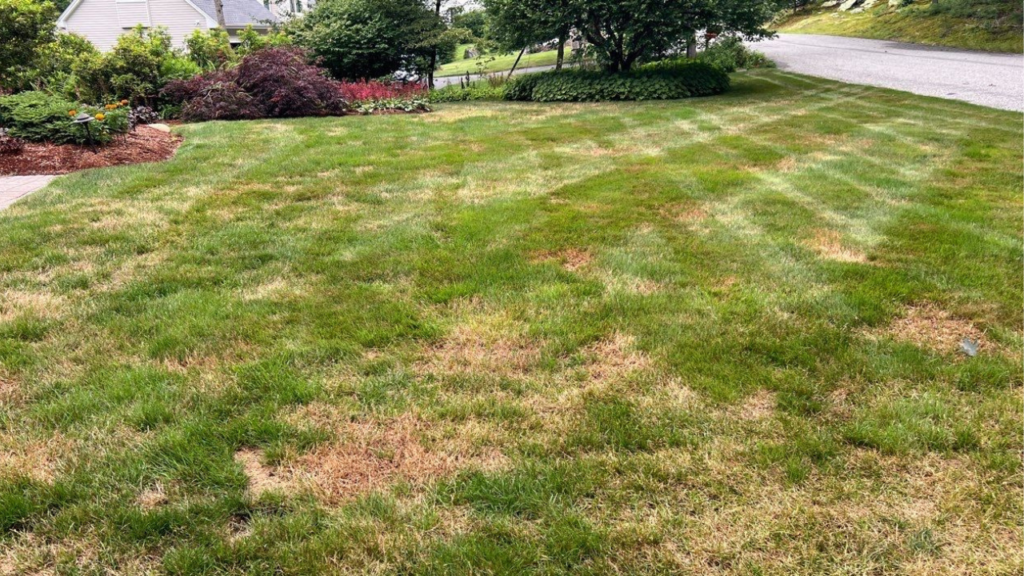
Lawns that go dormant early because of lack of water tend to show more winter kill come spring. You’ll see thin areas, bare patches, spots where the grass just didn’t make it through the cold months. Then you’re looking at overseeding projects, bare dirt showing through your lawn, and a lot more work and money spent in spring.
The Difference Proper Fall Watering Makes
I’ve worked on properties side by side – literally neighbors with nearly identical lawns – where one homeowner kept watering into November and the other shut down in mid-October. The difference by spring is dramatic.
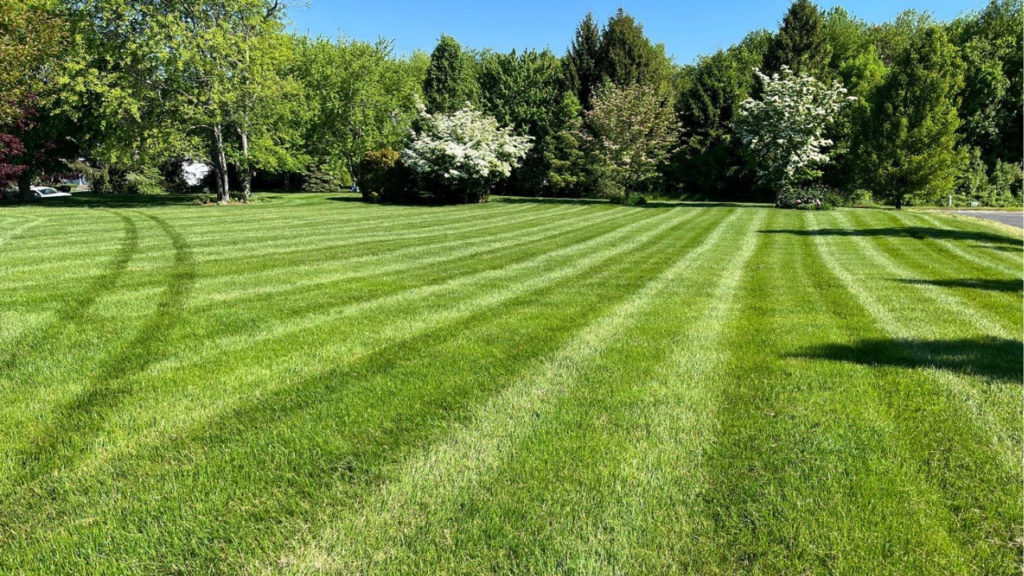
The lawn that got consistent water through fall comes out of winter thicker, greener earlier, and with way fewer bare spots. The one that went dry in October? Thin patches, winter kill, areas that need reseeding. It’s not even close.
If you literally don’t want to buy grass seed in spring, and you don’t like seeing bare dirt and mud in your lawn, then keep that irrigation going a few more weeks. Trust me on this one.
You Need Way Less Water Than You Think
Here’s the good news – fall watering is nothing like summer watering. You’re not running your system three times a week putting down heavy amounts of water. The cooler temperatures and shorter days mean water evaporation is minimal.
In most of Connecticut – whether you’re on the coast in Madison or inland around Norwich – you can probably get by with watering once every 10 days this time of year and keep your lawn perfectly hydrated.
Think about it this way: One watering around October 20th, another around October 30th, and one more around November 10th. That’s it. Three irrigation cycles, and your lawn stays healthy all the way until it naturally goes dormant based on cold temperatures and reduced sunlight, not because it’s dying of thirst.
What About Winterizing Your Irrigation System?
I get this question all the time – “Steve, won’t watering this late freeze my pipes?” Let me put your mind at ease about this.
First frost has to do with air temperature dropping to around 30 degrees. You’ll see frost on your grass, but your irrigation system sits 6 to 12 inches below the surface. At that depth, soil temperatures are still around 50 degrees even when there’s frost on the ground.
The water coming through your irrigation system is coming from deep underground where it’s warmer than the air. Literally watering on the day of first frost is going to warm your soil, not freeze your pipes. The air cools things off – the water from deep in the ground is actually warmer.
I don’t winterize my systems until we’re well into November, sometimes even pushing Thanksgiving depending on how the weather’s running. By that point, we’re getting enough natural rainfall here in Connecticut that irrigation isn’t needed anyway.
When Dormancy Should Happen (And Why)
Your lawn should go dormant because of the season – shorter days, colder temperatures, natural plant processes shutting down for winter. That’s healthy dormancy that the grass is designed to handle.
What you don’t want is dormancy caused by dehydration. When a lawn is lacking water going into winter, it’s significantly more likely to experience winter kill. The grass crowns need adequate moisture to survive the freeze-thaw cycles we get here in Connecticut, especially along the coast.

My Recommendation for Connecticut Properties
Based on four decades of experience with properties from the shoreline in Madison to inland areas around Norwich and Franklin, here’s what I recommend:
Keep irrigating through early November – About once every 10 days is plenty Let natural dormancy happen – Cold and darkness will shut the grass down, not drought Winterize after Thanksgiving – Or whenever consistent rain arrives and grass stops growing Plan less work for spring – Properly hydrated lawns survive winter better
The coastal properties around Madison, Clinton, and Guilford can often push watering even later since temperatures stay milder near Long Island Sound. Inland areas cool down faster, but you’re still looking at early November before shutting things down completely.
The Spring Payoff
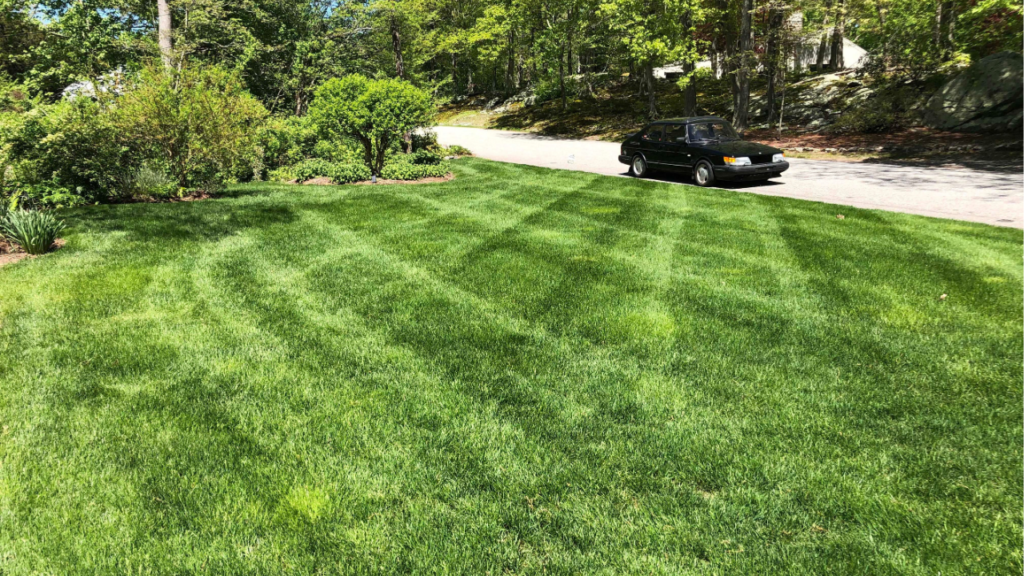
Here’s what proper fall watering gets you come spring: Your lawn greens up faster, fills in thicker, and has way fewer bare spots that need attention. You’re not scrambling to overseed problem areas or dealing with mud patches through April and May.
I’ve seen it play out thousands of times over my 41 years in this business. The homeowners who keep their lawns hydrated through fall spend less time and money fixing problems in spring. It’s that simple.
Fixing winter kill in spring is hard work. It means overseeding, dealing with bare dirt, fighting weeds that move into thin areas. I don’t want to do that work, and I don’t want you to have to do it either unless absolutely necessary.
I Know It’s Tempting to Call It Quits
Look, I understand the temptation to shut everything down around mid-October and just be done with lawn care for the year. You’ve been mowing, watering, and maintaining all season long. You’re ready for a break.
But those three or four extra irrigation cycles make such a big difference for next year. We’re not talking about heavy summer watering schedules – just a light watering every 10 days or so to keep the grass crowns hydrated as they prepare for dormancy.
The small effort now saves you significant work and expense in spring. After doing this for over four decades, I can tell you it’s absolutely worth it.
Don’t Leave Your Lawn’s Health to Chance
If you want your lawn professionally managed through fall and properly prepared for winter, we’ve been helping Connecticut homeowners do exactly that since 1983. We understand the differences between coastal and inland properties, and we know precisely when and how much to water for optimal results.
Here’s What We Provide:
- Customized irrigation schedules based on your property’s specific conditions
- Proper fall hydration to prevent winter kill
- Professional winterization timing for irrigation systems
- Complete fall lawn care programs including fertilization and soil amendments
- Science-based approach using UConn soil testing
We serve properties throughout eastern Connecticut from our Madison and Norwich locations. Our 90% customer retention rate shows what happens when you combine local knowledge with proven methods.
Give us a call or visit lawnscience.com to discuss your fall lawn care needs. We’ll evaluate your property’s specific situation and make sure everything is properly prepared for winter.
Over 3,000 satisfied customers trust us because we’ve been their neighbors for over 40 years. We’re not going anywhere, and we have a real stake in keeping our Connecticut communities beautiful.
The bottom line? Those last few weeks of fall watering make a bigger difference than most people realize. Don’t let your lawn go into winter stressed and dehydrated. A few more irrigation cycles now means a healthier, thicker lawn next spring – and a lot less work for you.
Follow Us for More Lawn Care Tips
Get FREE Grub Control
when you sign up for our 5-Step Lawn Care Program.
